Caspar David Friedrich
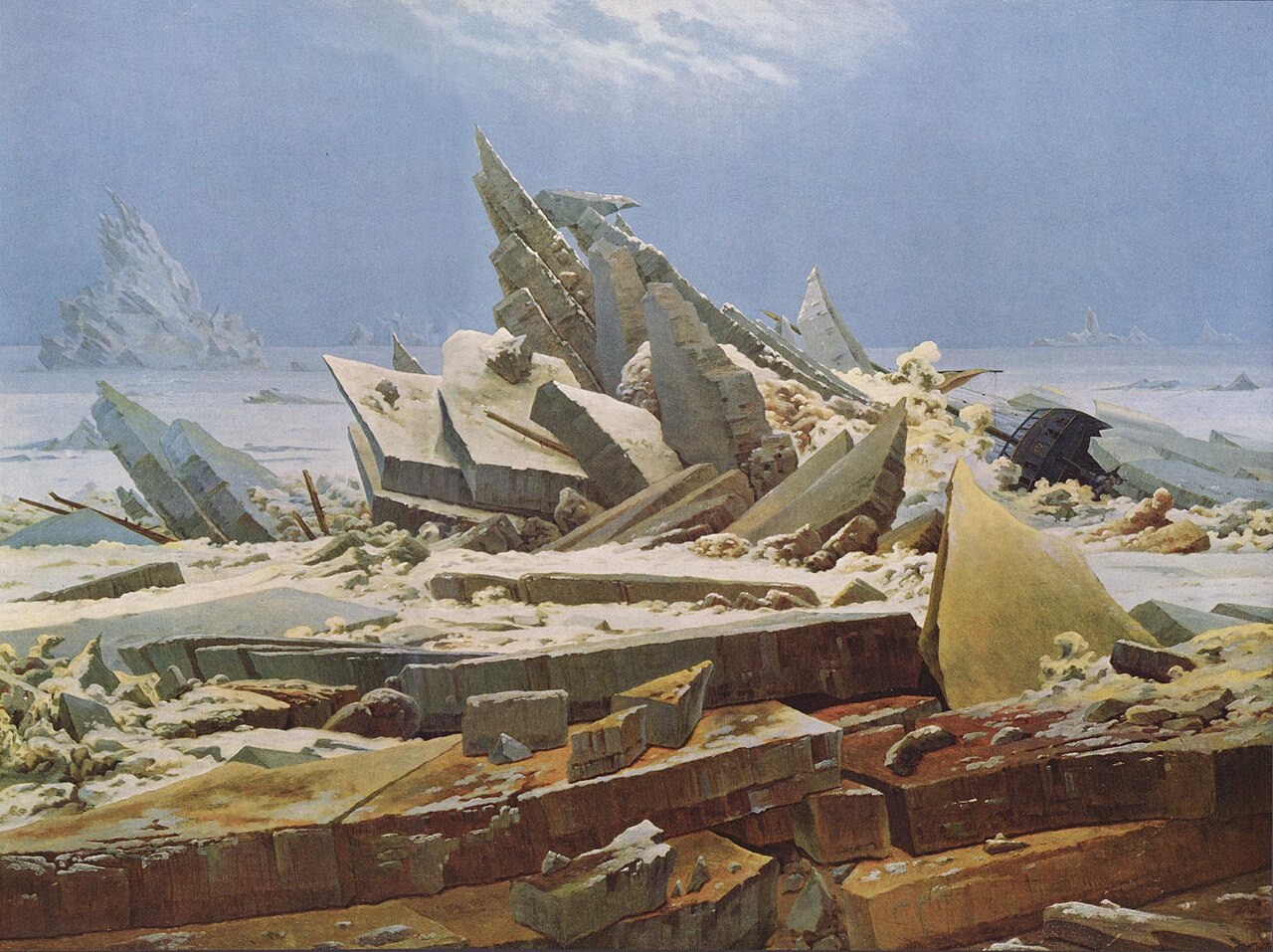
The Sea of Ice
Sharp planes of broken ice rise higher than the vessel they almost conceal.
Read the artwork essayCURATED IN SEOUL
INSPIRED BY EUROPE
Caspar David Friedrich · c. 1817
A back-turned figure stands between solid dark rock and fog that dissolves boundaries.
Reading color and composition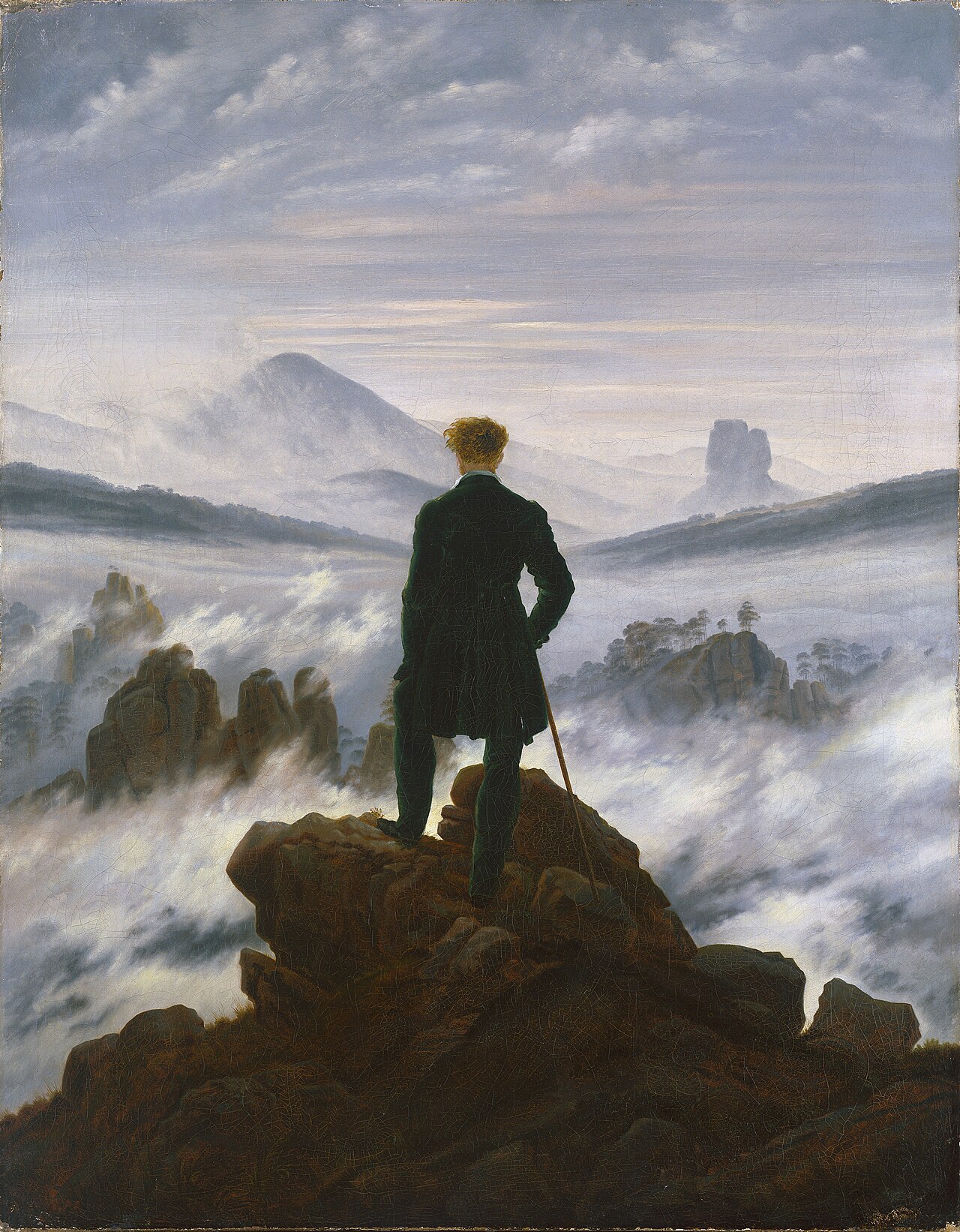
Reading color and composition
Trace the coat’s silhouette, then descend to the rock edge. Near stone is rough and sharp; distant ridges grow pale. The figure both connects us with the view and blocks its centre. Imagine removing him: the location where distance begins would change, even though the mountains remained.
Fog is not simply an empty white sea. It is a luminous layer that makes depth difficult to measure. Compare pointed peaks with soft cloud edges. Standing above the view need not mean mastering nature; confidence underfoot and uncertainty ahead can remain equally strong. The picture becomes more open when we resist assigning the traveller one predetermined feeling.
Discussion of color and composition is the editorial team’s interpretation, not a claim to establish the artist’s intentions.
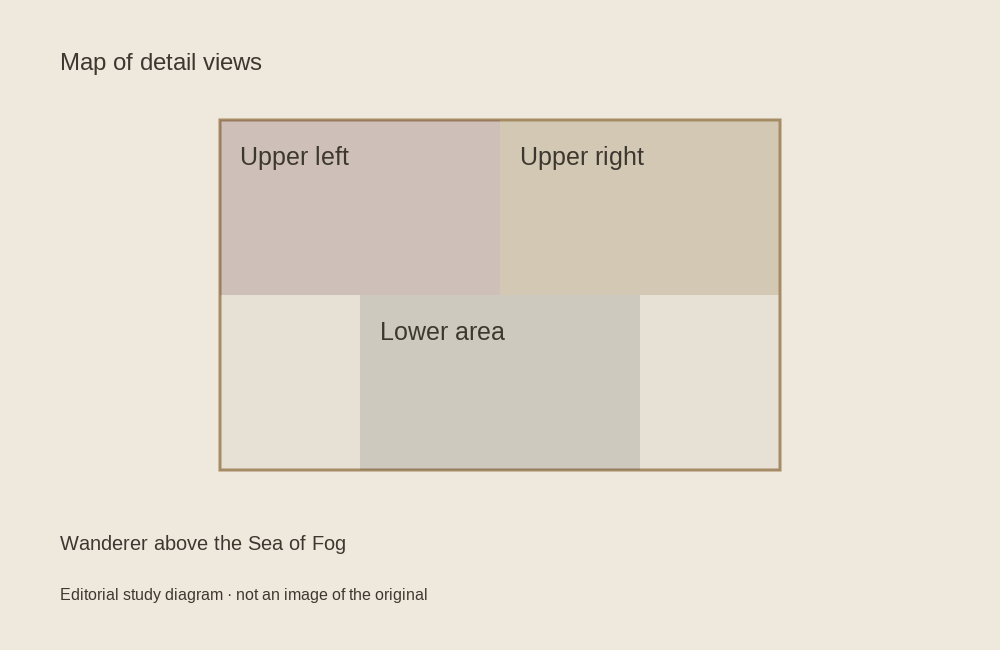
Caspar David Friedrich
Hamburger Kunsthalle currently dates the work to about 1817.
It shifts attention from a readable expression to the relationship between posture and landscape.
This reading does not assign a specific identity. Begin with the visible back view and the construction of distance.
Official artwork record · Hamburger Kunsthalle
Image source and usage terms · Public domain · Caspar David Friedrich