Caspar David Friedrich
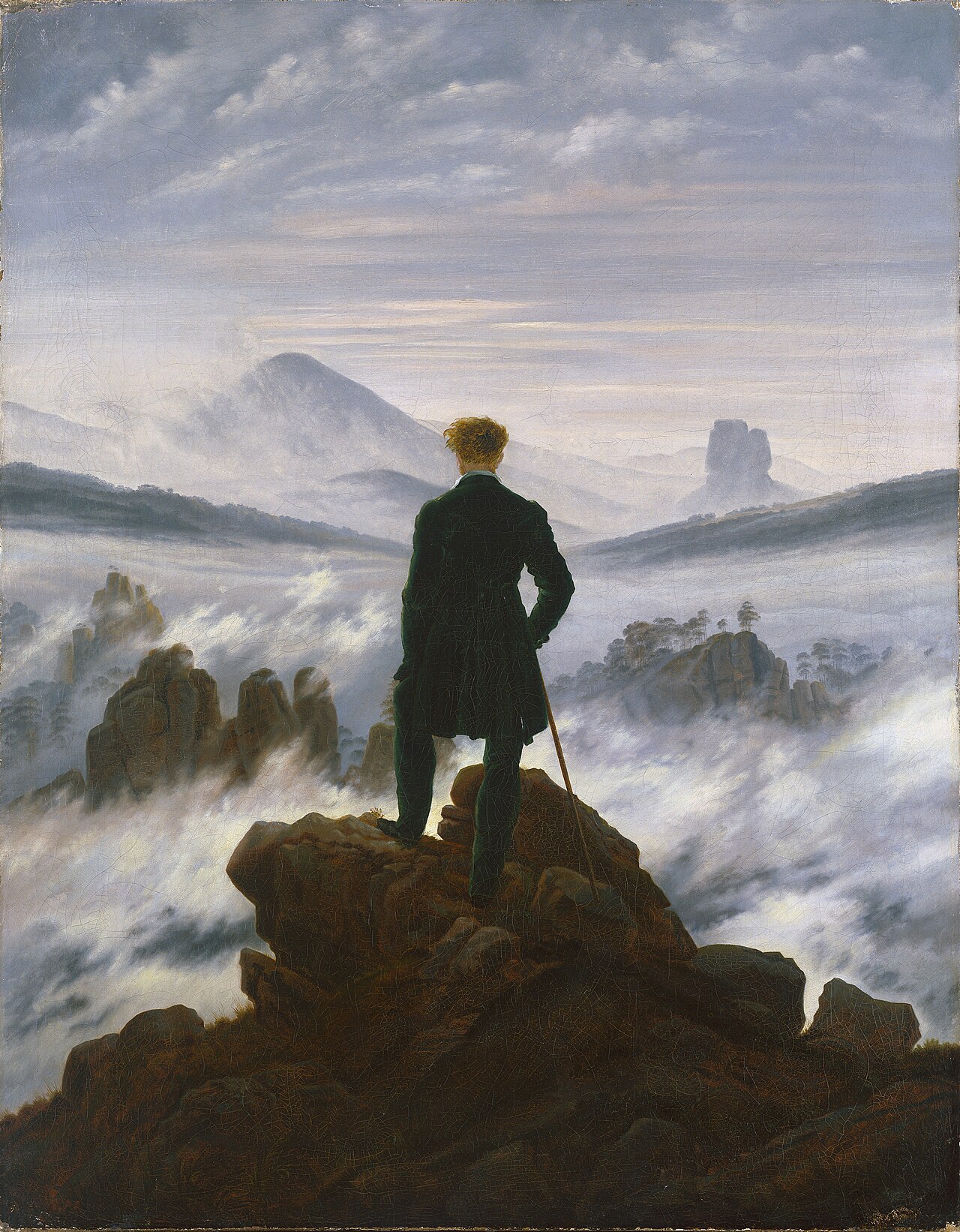
Wanderer above the Sea of Fog
A back-turned figure stands between solid dark rock and fog that dissolves boundaries.
Read the artwork essayCURATED IN SEOUL
INSPIRED BY EUROPE
Caspar David Friedrich · 1823–1824
Sharp planes of broken ice rise higher than the vessel they almost conceal.
Reading color and composition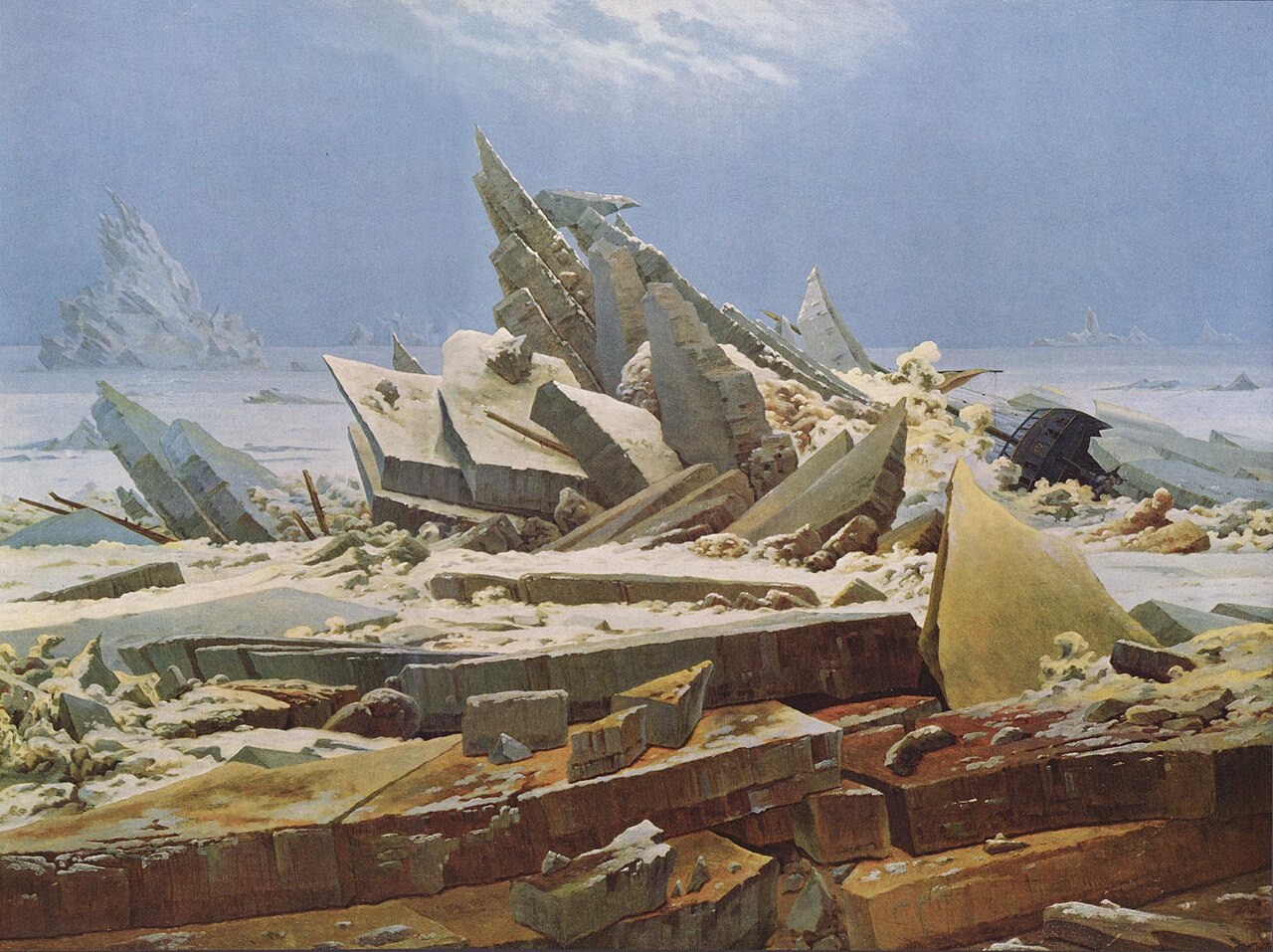
Reading color and composition
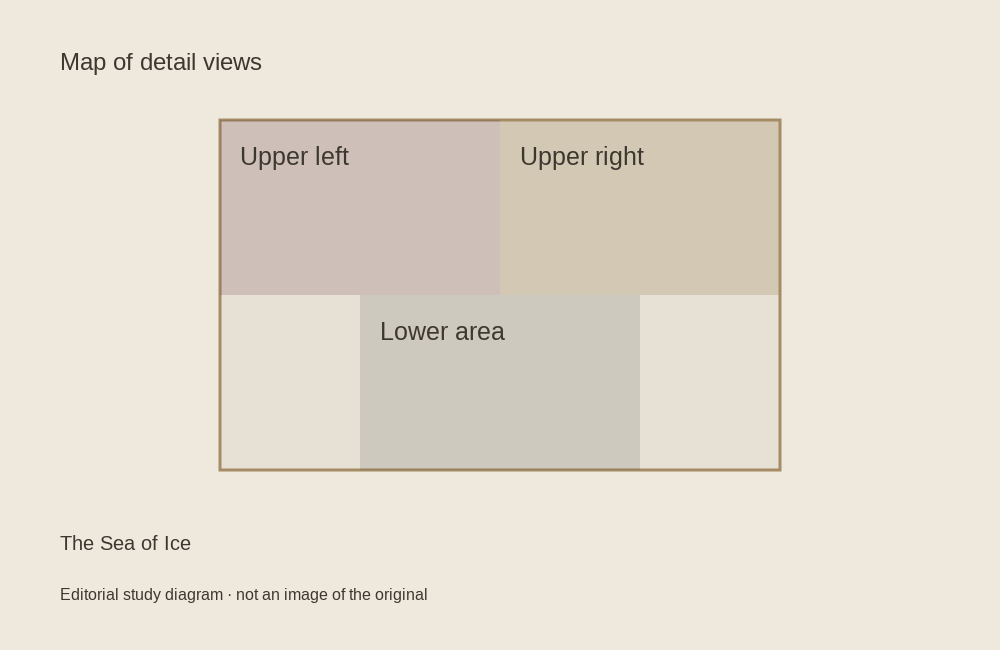
Move from nearly horizontal foreground ice toward the tilted central plates. Their overlapping edges produce a climbing direction without making a secure structure. Light faces and dark crevices lend the ice solidity, yet the way it is stacked separates hardness from stability. Those are not the same physical quality here.
Compare the low pale ice far away with the dense splinters nearby. The atmosphere seems quiet while pressure remains visible in the foreground. No face or gesture is needed to suggest an event. After locating the vessel, return to the same angles: a formally beautiful arrangement may now feel threatening, although none of its painted shapes has changed.
Discussion of color and composition is the editorial team’s interpretation, not a claim to establish the artist’s intentions.
Caspar David Friedrich
Friedrich painted this Hamburger Kunsthalle work in 1823–1824.
Its scale and forceful diagonals occupy far more visual space than the vessel.
No. The small hull against immense ice makes human absence meaningful and gives the viewer a narrative clue.
Official artwork record · Hamburger Kunsthalle
Image source and usage terms · Public domain · Caspar David Friedrich