Francisco Goya
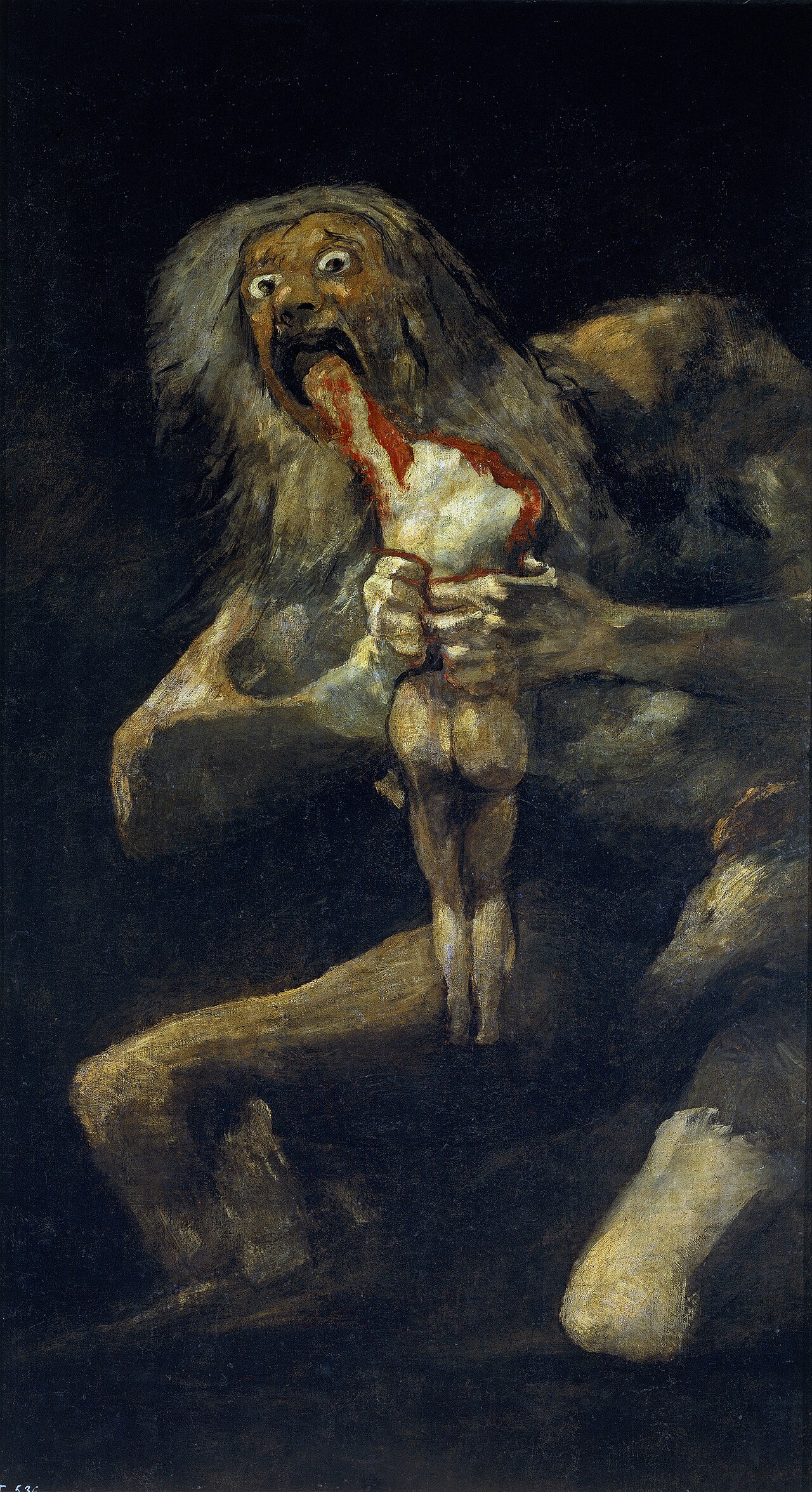
Saturn Devouring His Son
Eyes and gripping hands emerge from darkness, making the body’s scale and balance difficult to settle.
Read the artwork essayCURATED IN SEOUL
INSPIRED BY EUROPE
Francisco Goya · 1814
Visible faces and faceless ranks make the imbalance of violence palpable through light and repetition.
Reading color and composition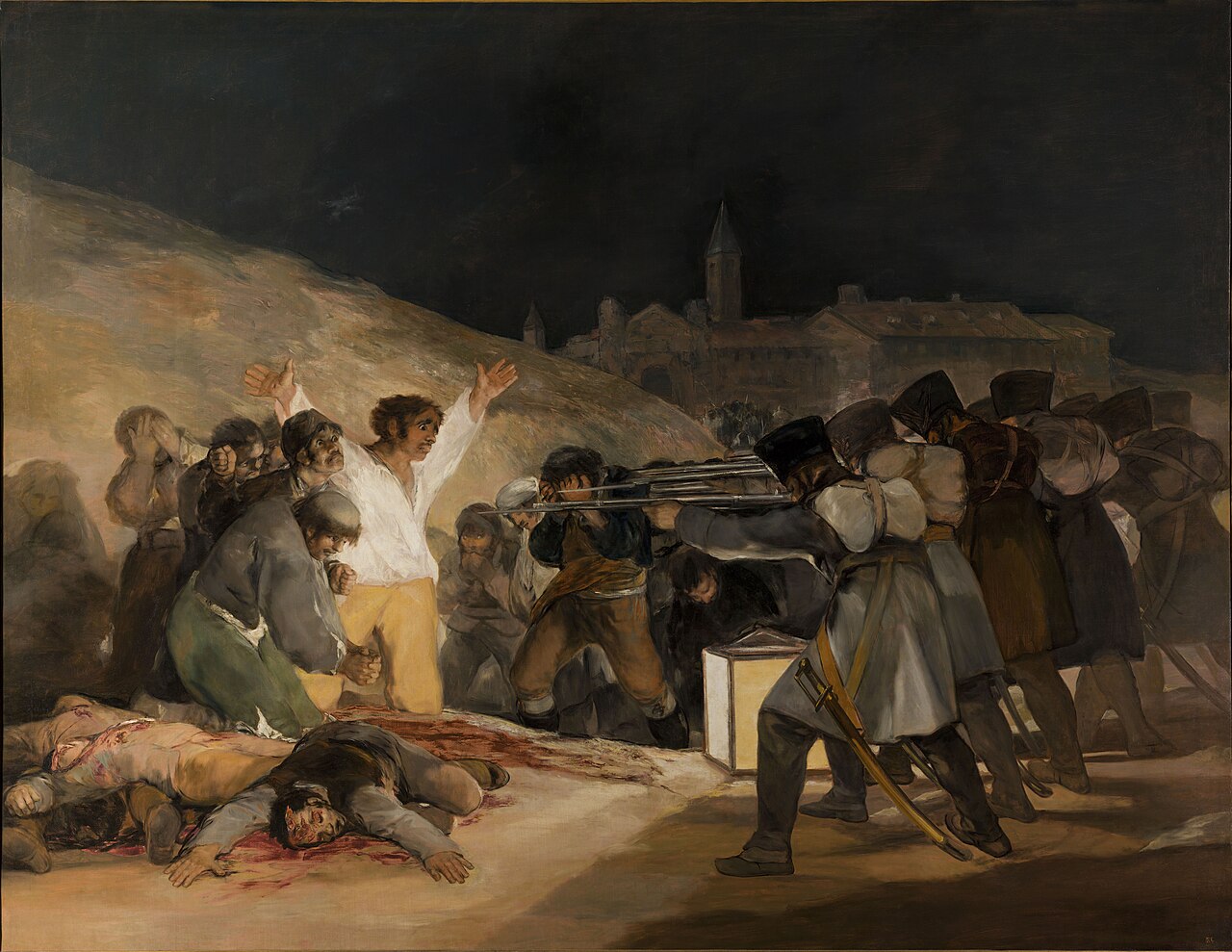
Reading color and composition
The lantern is small, yet it sharply divides the illuminated ground. Follow its light below the standing man to bodies already fallen, then behind him to those waiting. Dead, present and next are placed within one composition. The picture lets the eye encounter several stages without turning the scene into separate narrative panels.
Compare repeated gun barrels with the open shape of the white shirt. Weapons gather diagonally and push the eye forward; spread hands seem to arrest that movement. Look toward the distant buildings and dark sky, then return to the foreground. The abrupt change of distance can make the figures feel more urgently close.
Discussion of color and composition is the editorial team’s interpretation, not a claim to establish the artist’s intentions.
Francisco Goya
Goya painted the 1808 executions in 1814; the work belongs to the Prado.
No. The title dates the represented event; the painting was made in 1814.
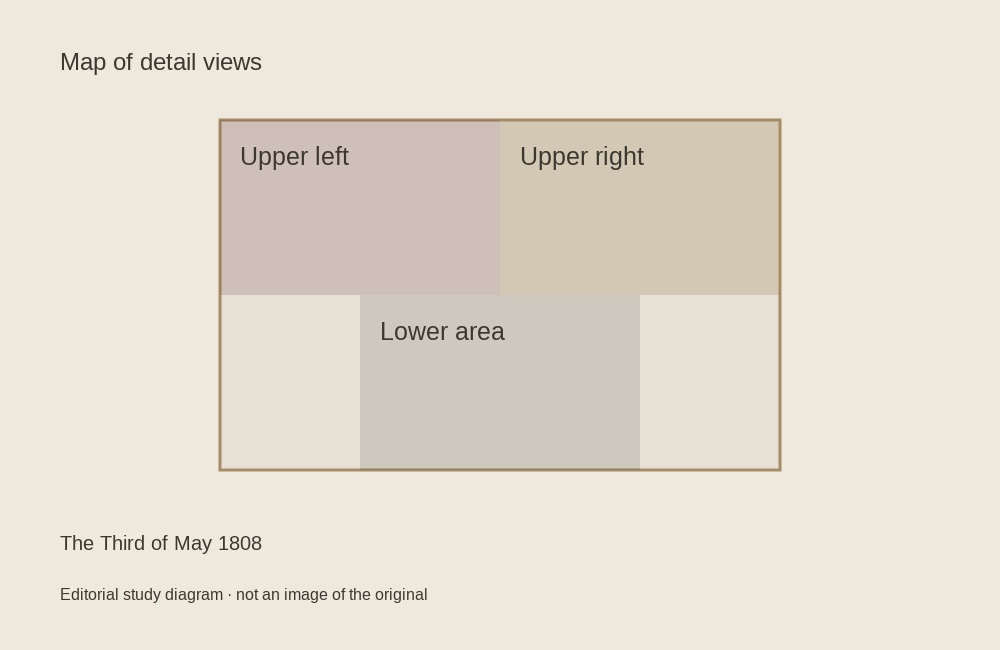
Waiting figures behind and fallen bodies before him extend the scene across different moments of the same violence.
Official artwork record · Museo Nacional del Prado
Image source and usage terms · Public domain · El_Tres_de_Mayo,_by_Francisco_de_Goya,_from_Prado_in_Google_Earth.jpg : Francisco de Goya derivative work: Papa Lima Whiskey 2