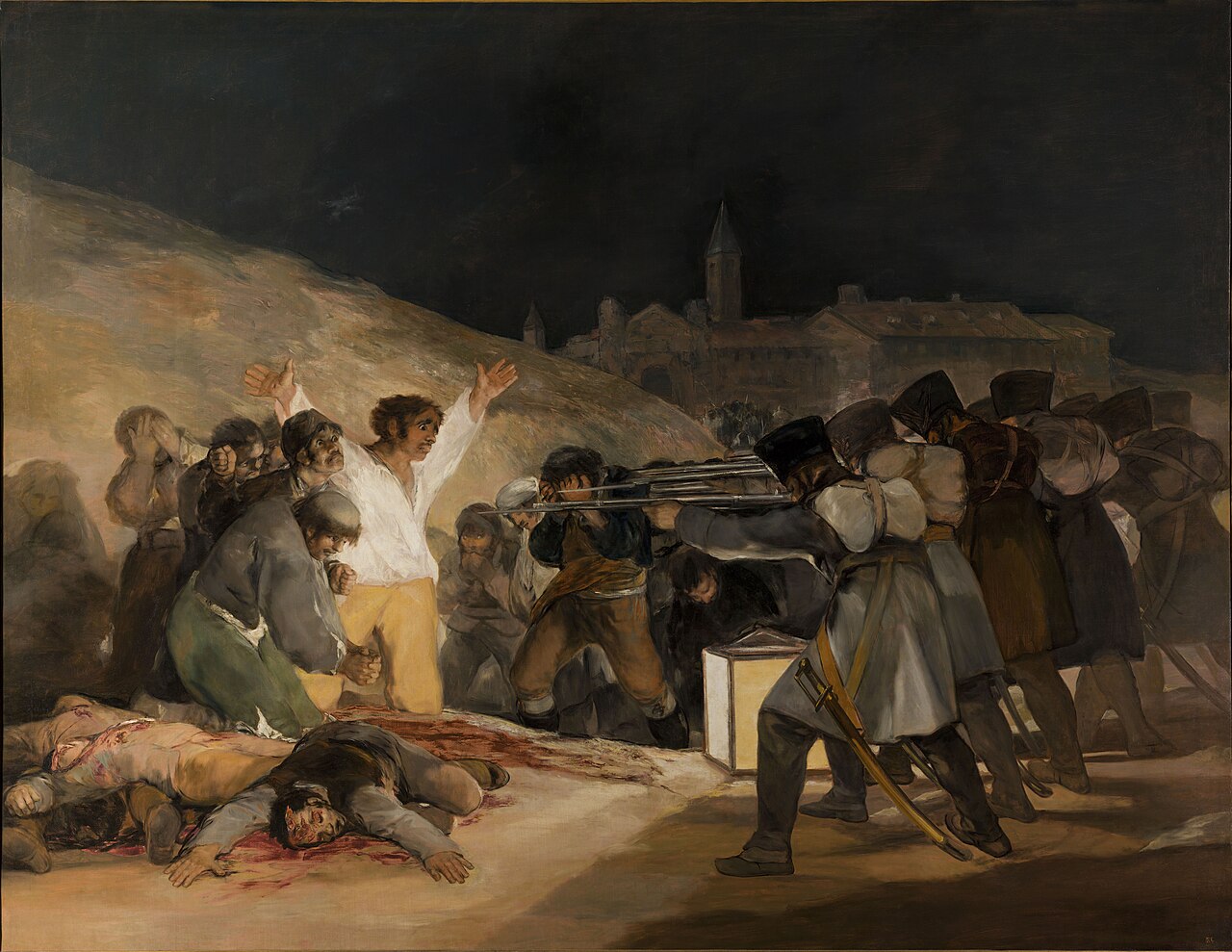
Francisco Goya
The Third of May 1808
Visible faces and faceless ranks make the imbalance of violence palpable through light and repetition.
Read the artwork essayCURATED IN SEOUL
INSPIRED BY EUROPE
Francisco Goya · 1820–1823
Eyes and gripping hands emerge from darkness, making the body’s scale and balance difficult to settle.
Reading color and composition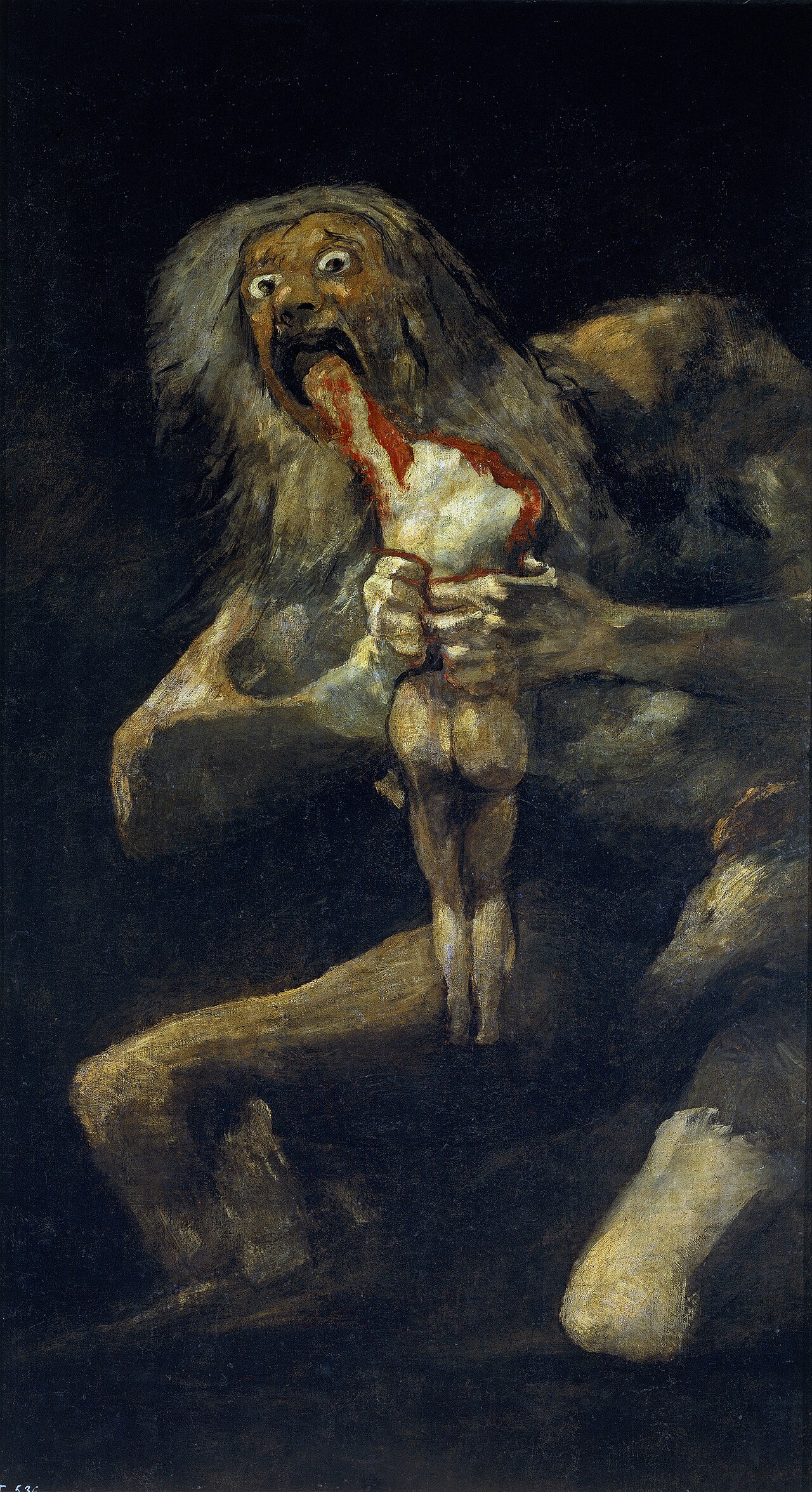
Reading color and composition
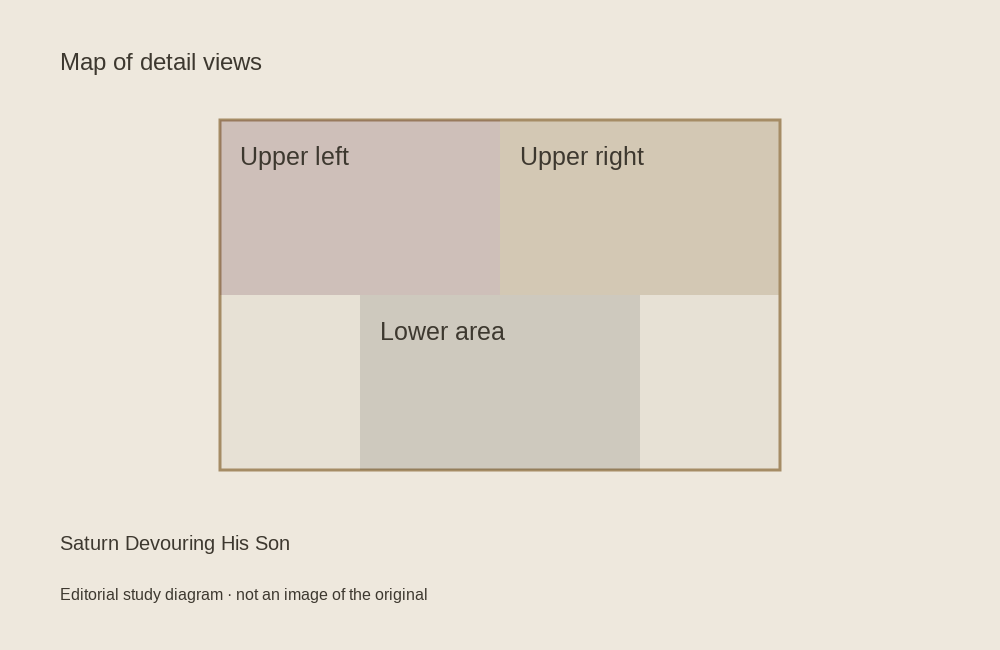
Compare whether the eyes or hands hold you first. The enlarged eyes seem turned outward, yet their direction does not feel comfortably fixed. Fingers pressing into flesh create a pressure as forceful as the mouth. Looking at these points separately changes the scene from a single recognizable story into several competing bodily actions.
Bright shoulder and knee passages do not simply complete a figure; they expose its interruptions. Red occupies relatively little area but cuts through the browns with unusual force. Beyond the violent subject, notice how little secure space the picture gives us. There is no easy background route into which the eye can comfortably escape.
Discussion of color and composition is the editorial team’s interpretation, not a claim to establish the artist’s intentions.
Francisco Goya
This Prado work belongs to Goya’s Black Paintings, around 1820–1823.
No. Lost and interrupted contours make its position and scale unsettling.
The image cannot establish a medical diagnosis. Distinguish visual observation from documented historical context.
Official artwork record · Museo Nacional del Prado
Image source and usage terms · Public domain · Francisco Goya