Gustave Courbet
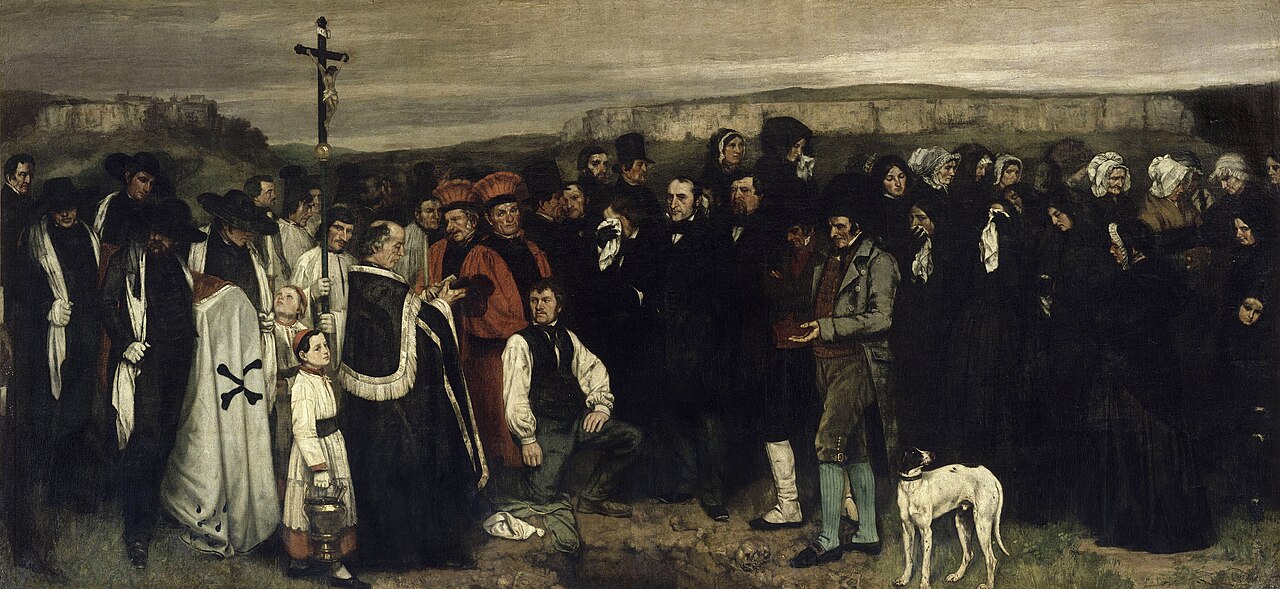
A Burial at Ornans
An open grave reaches toward the viewer before a long band of dark-clothed mourners.
Read the artwork essayCURATED IN SEOUL
INSPIRED BY EUROPE
Gustave Courbet · 1854–1855
A landscape on an easel becomes another opening between two very different crowds.
Reading color and composition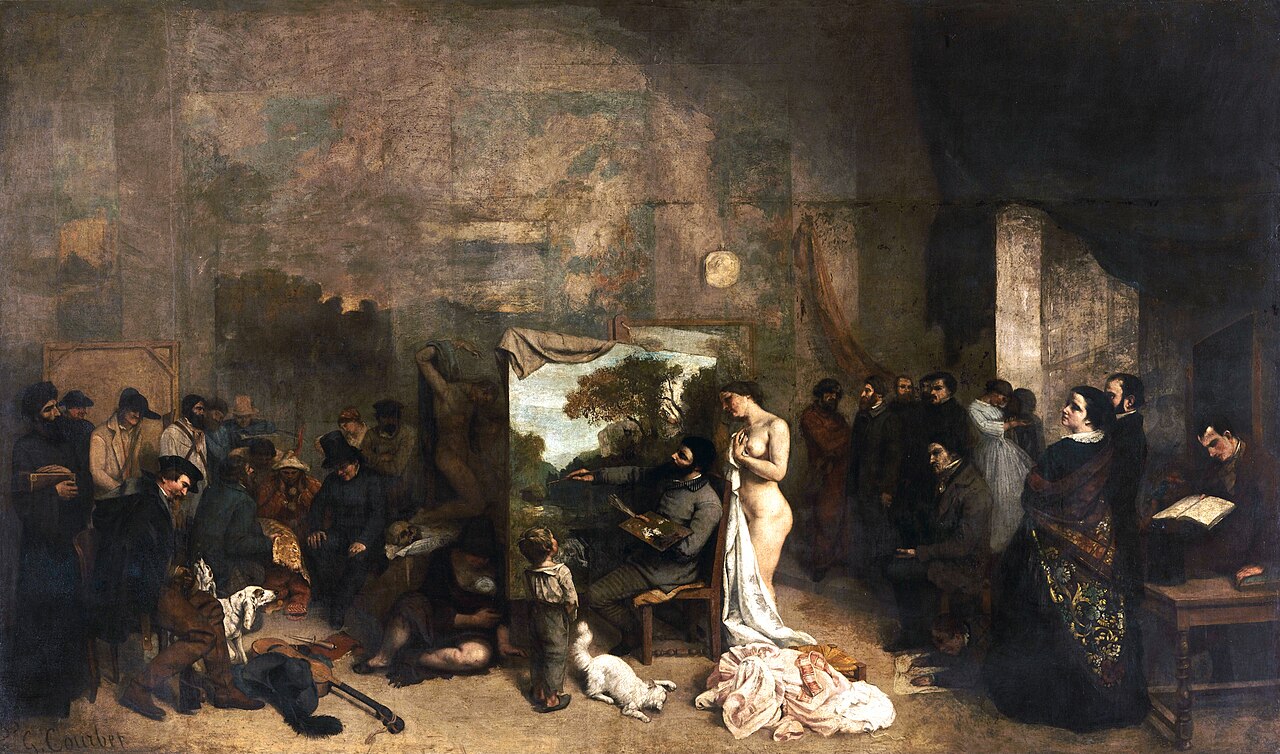
Reading color and composition
Compare the canvas inside the picture with the painting surrounding it. The small landscape seems to open onto nature while remaining an object being made. Brush arm, leaning easel and the upright neighbouring figure bring looking and making together. The scene lets us observe production rather than encounter only its finished result.
Move from overlapping bodies at left toward the more separated figures at right. Before identifying every person, ask who looks inward and who pursues another activity. The studio becomes a stage arranging relations between an artist and the world, rather than simply a room inventory. Its bright centre does not fully explain or absorb the people around it.
Discussion of color and composition is the editorial team’s interpretation, not a claim to establish the artist’s intentions.
Gustave Courbet
The Musée d’Orsay dates the painting to 1854–1855; its long subtitle calls it a real allegory.
Its allegorical construction makes a photographic reading insufficient.
It creates a double act of looking: at the artist’s action and at the landscape he is producing.
Official artwork record · Musée d’Orsay
Image source and usage terms · Public domain · Gustave Courbet