Gustave Courbet
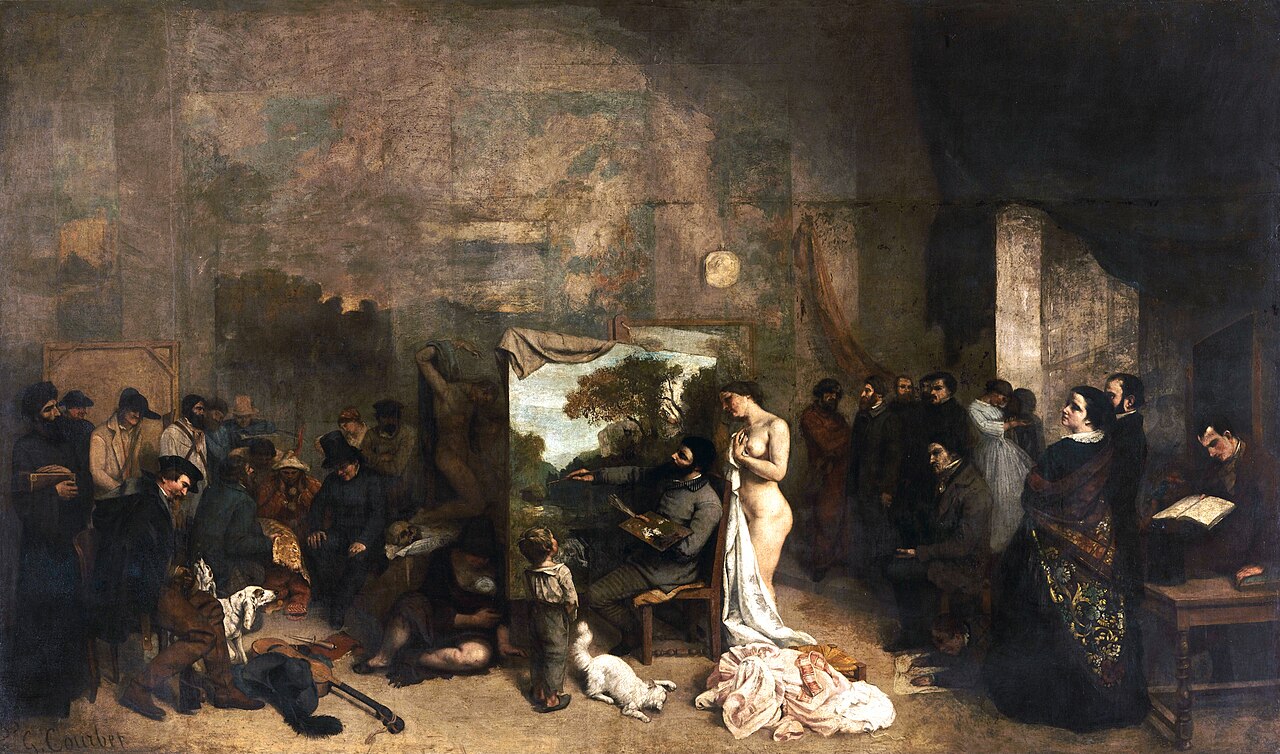
The Painter’s Studio
A landscape on an easel becomes another opening between two very different crowds.
Read the artwork essayCURATED IN SEOUL
INSPIRED BY EUROPE
Gustave Courbet · 1849–1850
An open grave reaches toward the viewer before a long band of dark-clothed mourners.
Reading color and composition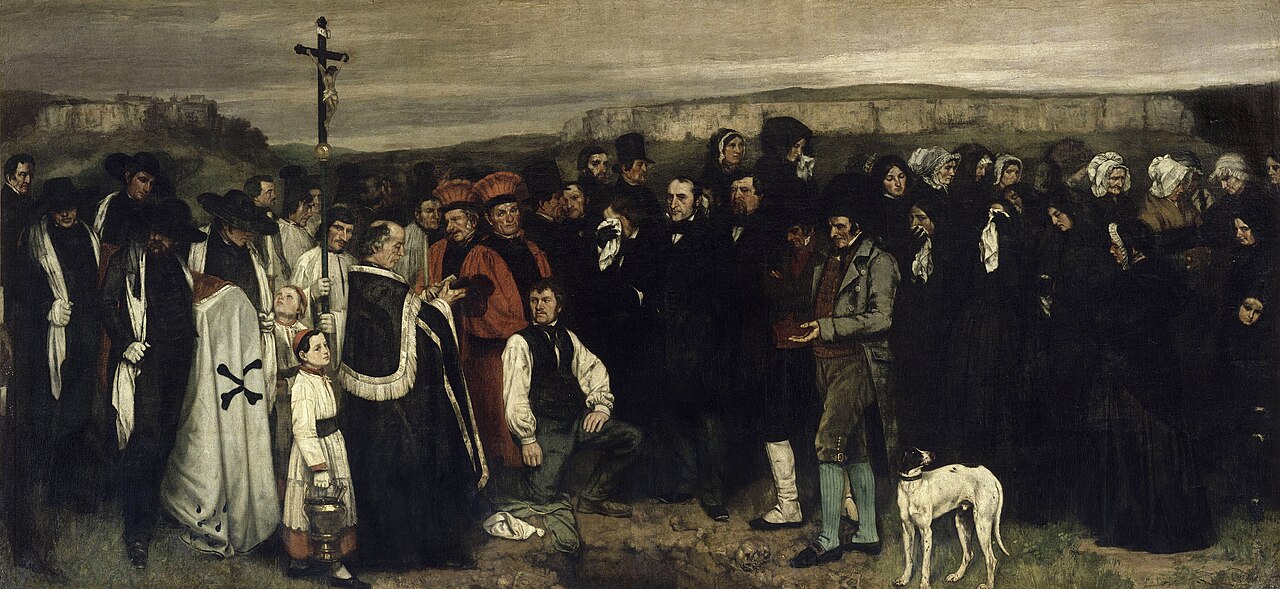
Reading color and composition
Move from white ceremonial clothes at left through the darker figures at right. Hands, faces and collars emerge at irregular intervals from the black mass. The cross’s vertical and the low cliff behind hold the scene together, but do not organise everyone into one readable expression. The group stays internally varied.
Looking along the grave’s near edge shifts us from distant spectators toward the level of the ground. The white dog introduces a different bodily rhythm beside formal clothes. In this enormous arrangement, ordinary differences are not erased for grandeur. Difficulty deciding whom to look at first becomes part of how the painting gives a community, rather than one protagonist, visual presence.
Discussion of color and composition is the editorial team’s interpretation, not a claim to establish the artist’s intentions.
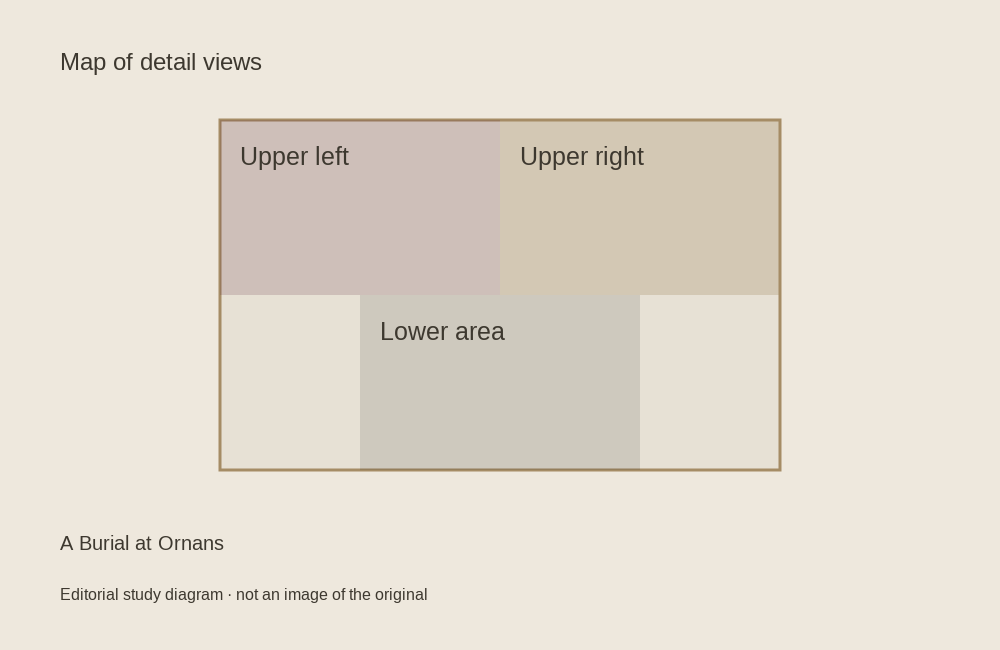
Gustave Courbet
Courbet painted this Musée d’Orsay work in 1849–1850.
Their different directions and postures encourage comparison rather than a single emotional label.
It opens the foreground toward us and creates a centre that is not occupied by a commanding figure.
Official artwork record · Musée d’Orsay
Image source and usage terms · Public domain · Gustave Courbet