Rembrandt van Rijn
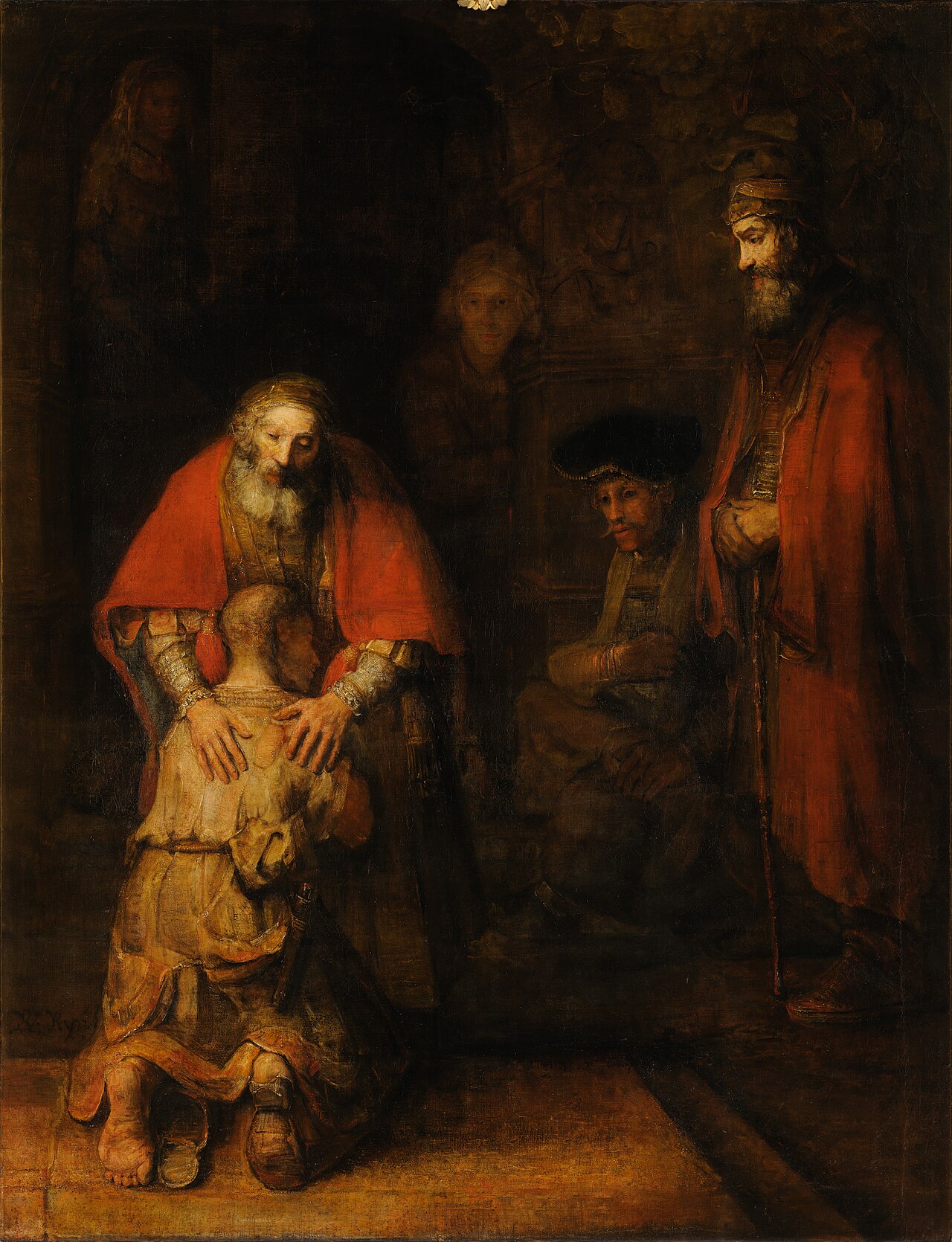
The Return of the Prodigal Son
Spend time with the kneeling body and the two hands resting above it.
Read the artwork essayCURATED IN SEOUL
INSPIRED BY EUROPE
Rembrandt van Rijn · 1642
A crowd of different movements replaces an orderly row of portraits.
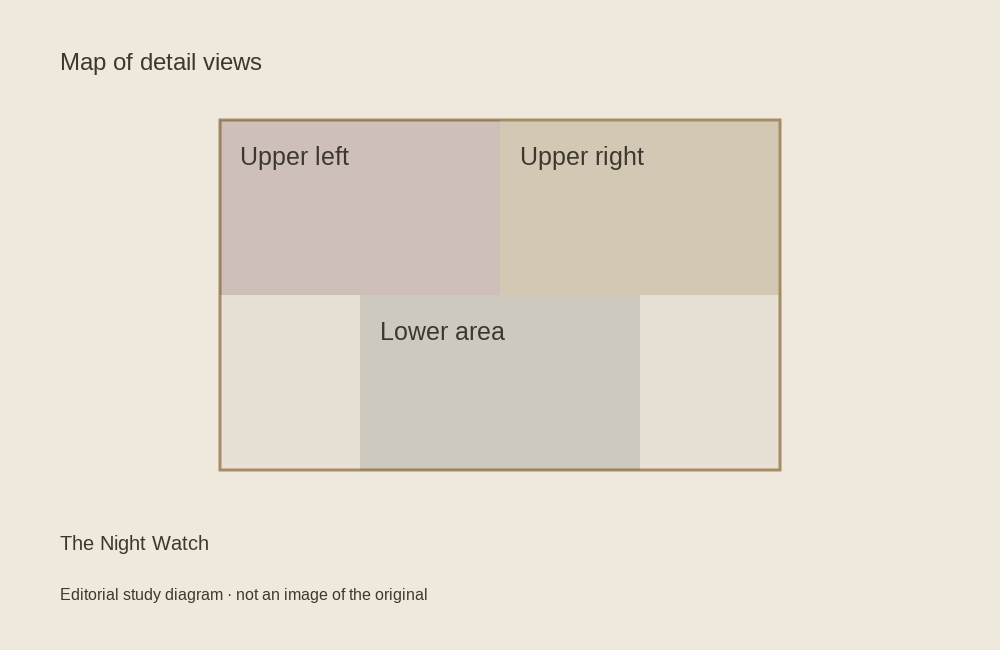
Reading color and composition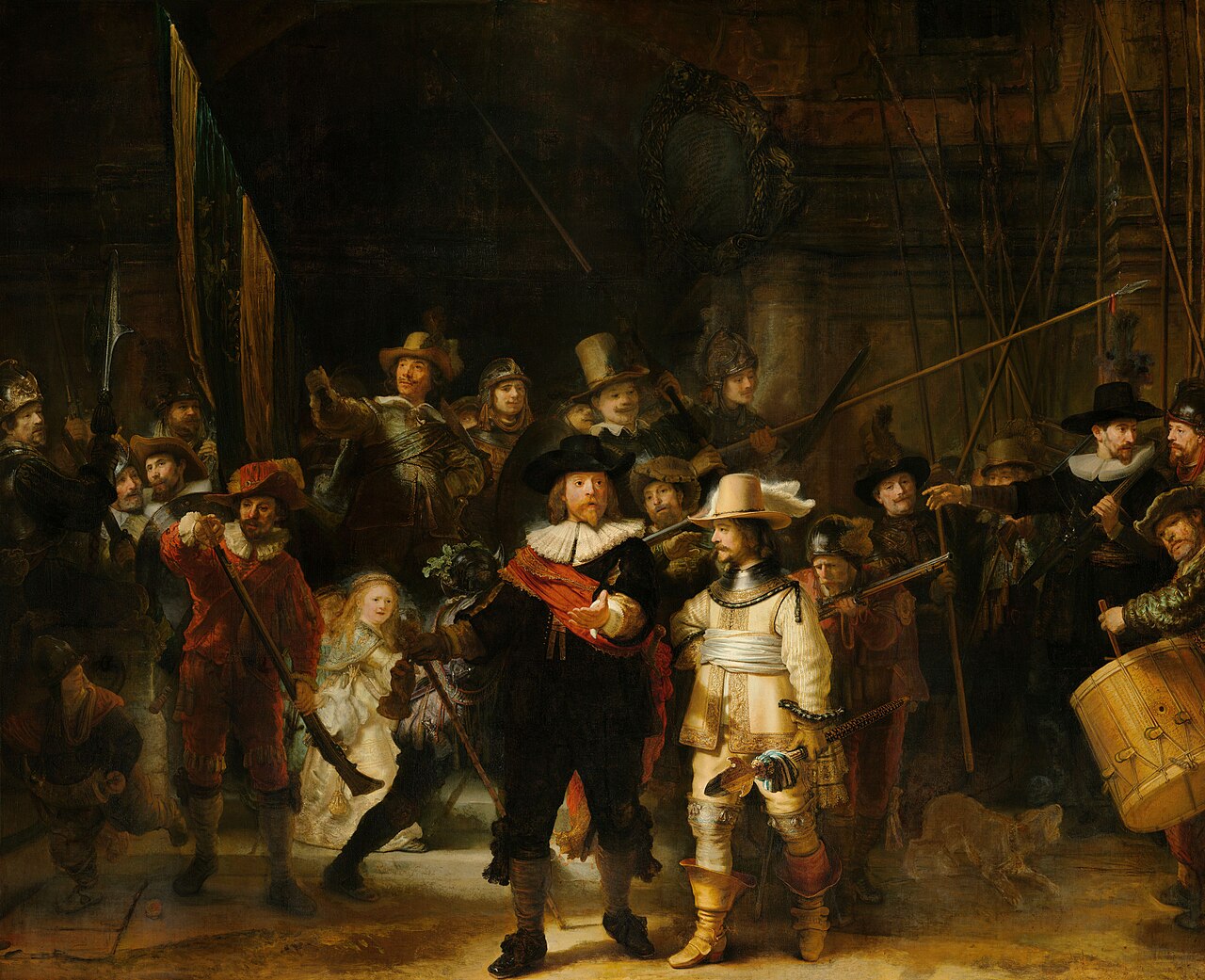
Reading color and composition
Compare the forward man’s hand with the long weapon beside him. The hand opens nearby space; the weapon’s line stresses another direction. Crossing diagonals keep the eye moving, while the large dark and light masses of the two figures hold the centre.
Find the small brightly dressed girl within the crowd. Illuminated faces and fabric are not limited to the front row. Link those bright fragments in sequence: they can lead your eye into the crowd and back out again. Observe the whole movement before selecting one face for closer attention.
Discussion of color and composition is the editorial team’s interpretation, not a claim to establish the artist’s intentions.
Rembrandt van Rijn
The Rijksmuseum records the date as 1642.
Night Watch is a later nickname; it does not establish the time of day.
Different actions and depths create movement among the figures.
Official artwork record · Rijksmuseum, Amsterdam
Image source and usage terms · Public domain · Rembrandt