Edgar Degas
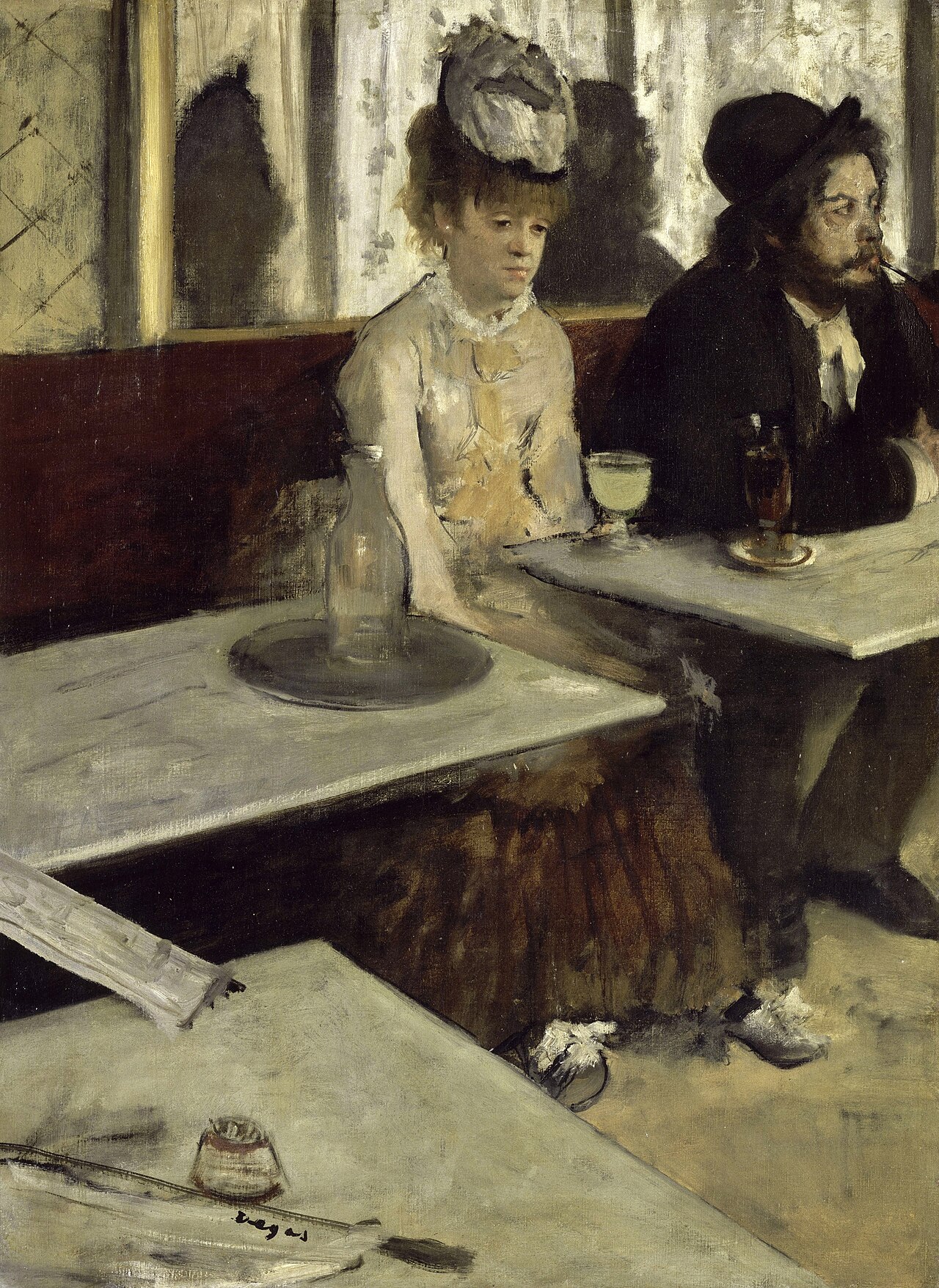
L’Absinthe
Empty tabletops approach two seated figures while keeping a distance from them.
Read the artwork essayCURATED IN SEOUL
INSPIRED BY EUROPE
Edgar Degas · 1874
Waiting bodies and open floor spread lesson time around a single dancer’s action.
Reading color and composition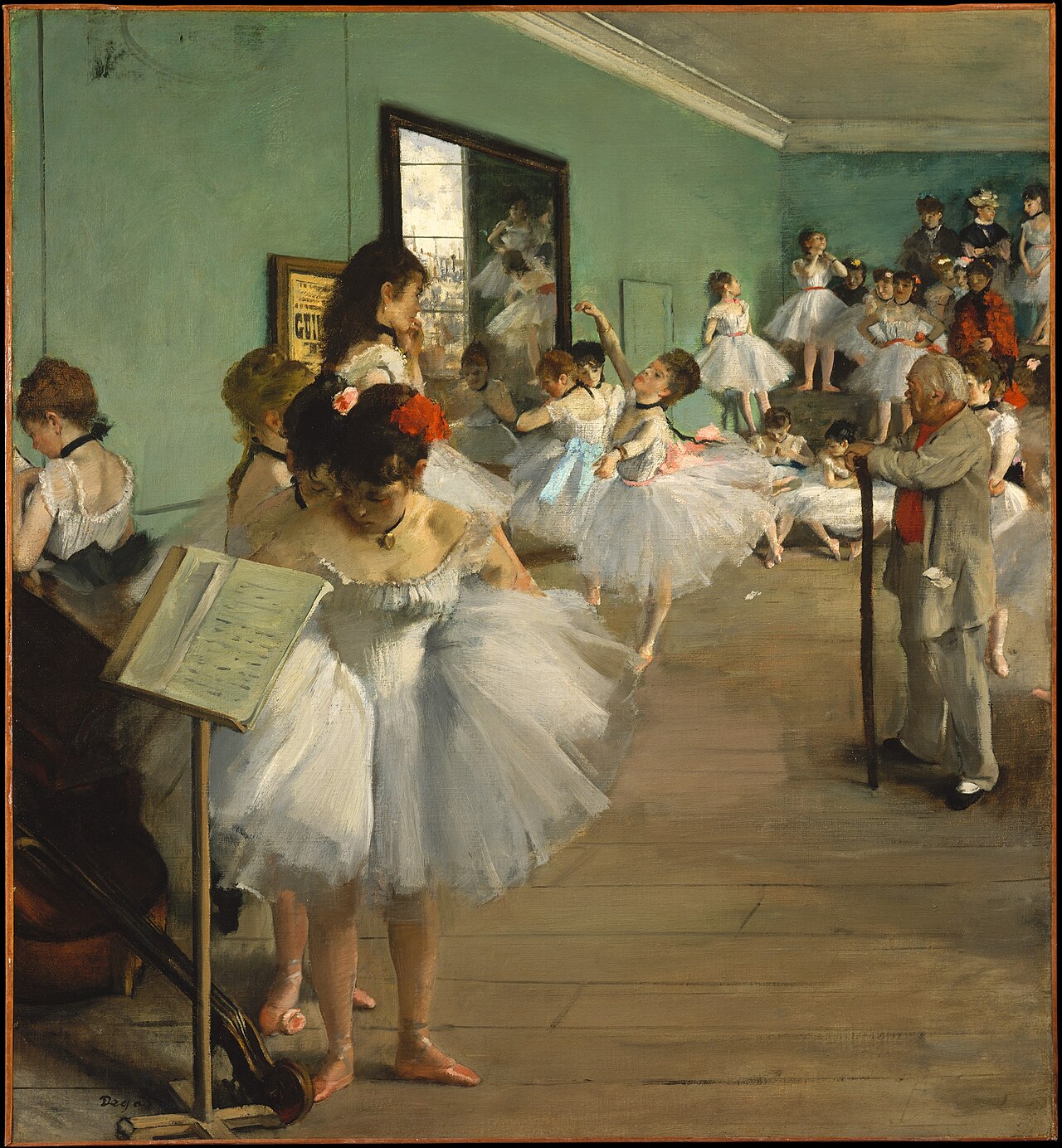
Reading color and composition
Examine the floor between figures. The broad light surface is not disposable emptiness: it measures the distance available for feet and bodies. Its diagonals carry us between large near figures and smaller distant ones. Rounded skirts create a softer rhythm against those firm directional lines. The space can feel active before any particular step has been named.
Move from the central pose toward surrounding hands and shoulders. The tension of a prescribed movement and the looseness of waiting occupy different kinds of time within one room. Similar costumes become broad pale masses or thin edges as bodies turn. Instead of deciding who dances best, ask how the painting allows preparation and interruption to occupy as much visible attention as performance.
Discussion of color and composition is the editorial team’s interpretation, not a claim to establish the artist’s intentions.
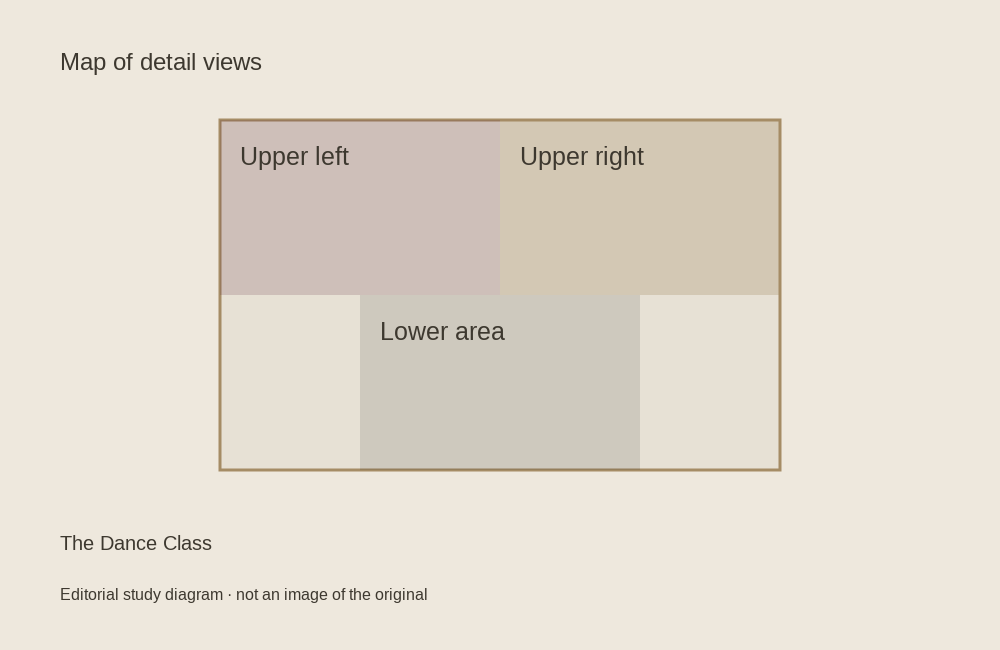
Edgar Degas
The Met’s painting dates to 1874 and differs from the related Musée d’Orsay version.
No. Comparing the central action with surrounding waiting is a useful starting point.
They are related but different compositions. This article concerns the Met’s 1874 painting.
Official artwork record · The Metropolitan Museum of Art
Image source and usage terms · Public domain · Edgar Degas