Edgar Degas
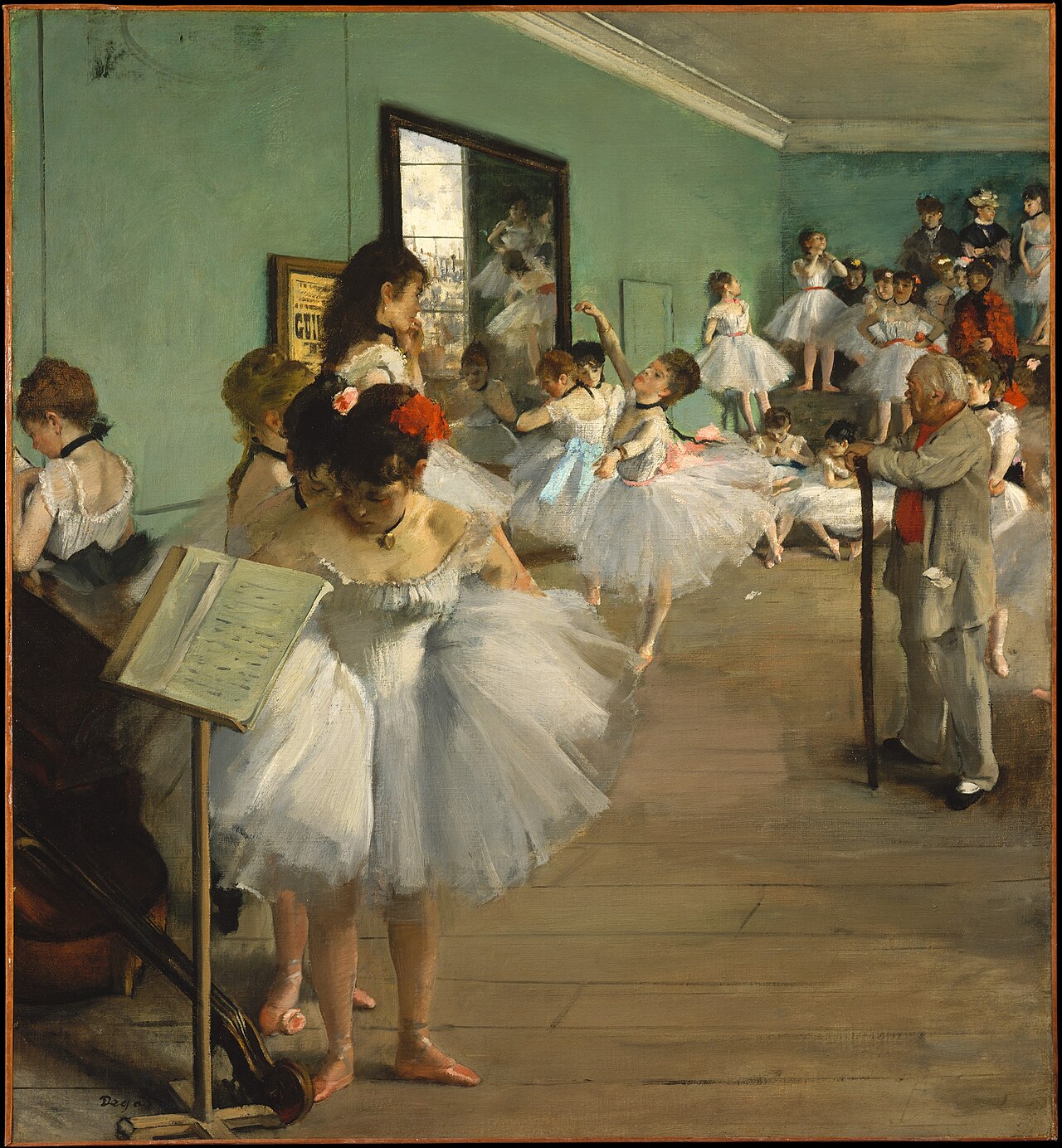
The Dance Class
Waiting bodies and open floor spread lesson time around a single dancer’s action.
Read the artwork essayCURATED IN SEOUL
INSPIRED BY EUROPE
Edgar Degas · 1875–1876
Empty tabletops approach two seated figures while keeping a distance from them.
Reading color and composition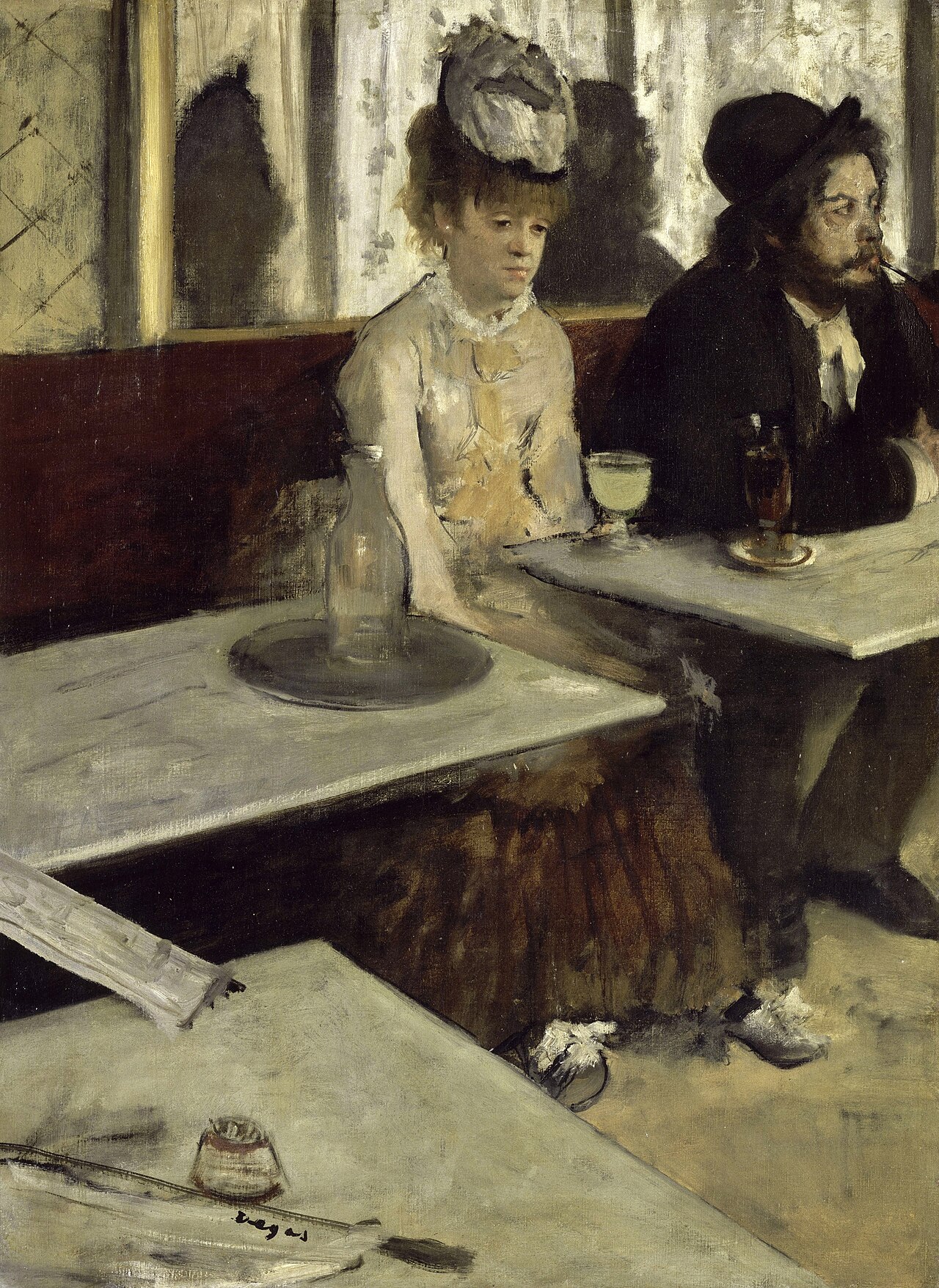
Reading color and composition
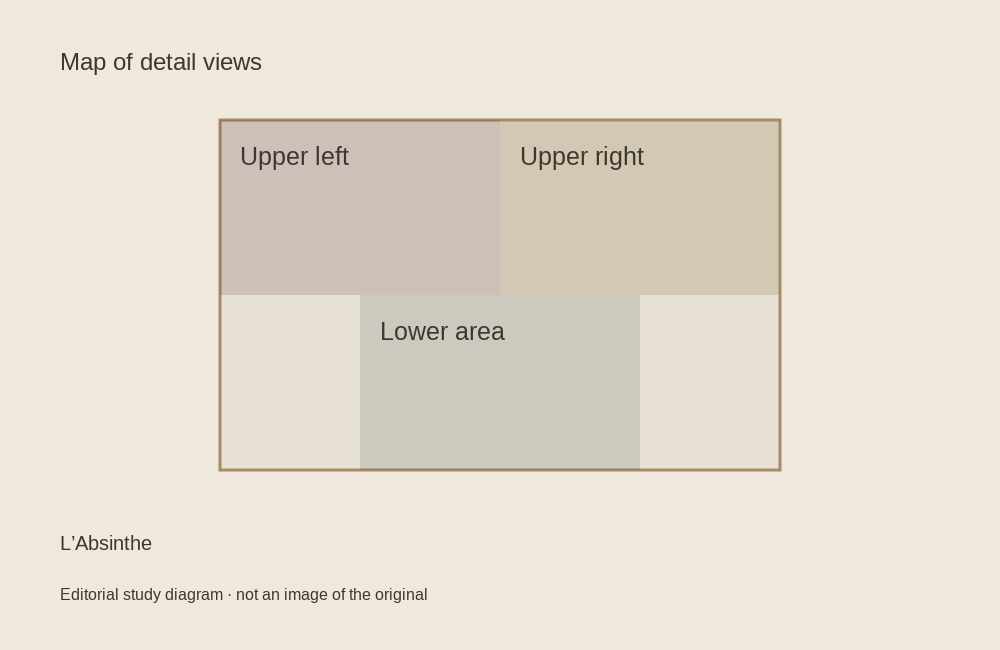
Follow the table edges inward. Their diagonals guide us toward the people while intervening bare surfaces delay arrival. Small circles and horizontals of glassware gain importance against the broad grey planes. Without a large event or theatrical gesture, spacing alone can make attention feel unusually concentrated.
Look at the mirror and the shadows behind the shoulders, then compare the faces. Two neighbouring bodies do not necessarily imply conversation. Neither can a painted expression establish a real person’s health or private life. The isolation we may feel is a pictorial effect: diverging looks, empty intervals and cropped edges work together, rather than giving direct access to anyone’s thoughts.
Discussion of color and composition is the editorial team’s interpretation, not a claim to establish the artist’s intentions.
Edgar Degas
Degas painted the Musée d’Orsay work in 1875–1876; its official title is In a Café.
No. The models played constructed roles; expressions do not support a real-life diagnosis.
It offers a route toward the figures while maintaining a gap between them and the viewer.
Official artwork record · Musée d’Orsay
Image source and usage terms · Public domain · Edgar Degas