John William Waterhouse · 1888
The Lady of Shalott
A small boat becomes a threshold between an enclosed life and an uncertain journey.
Reading color and composition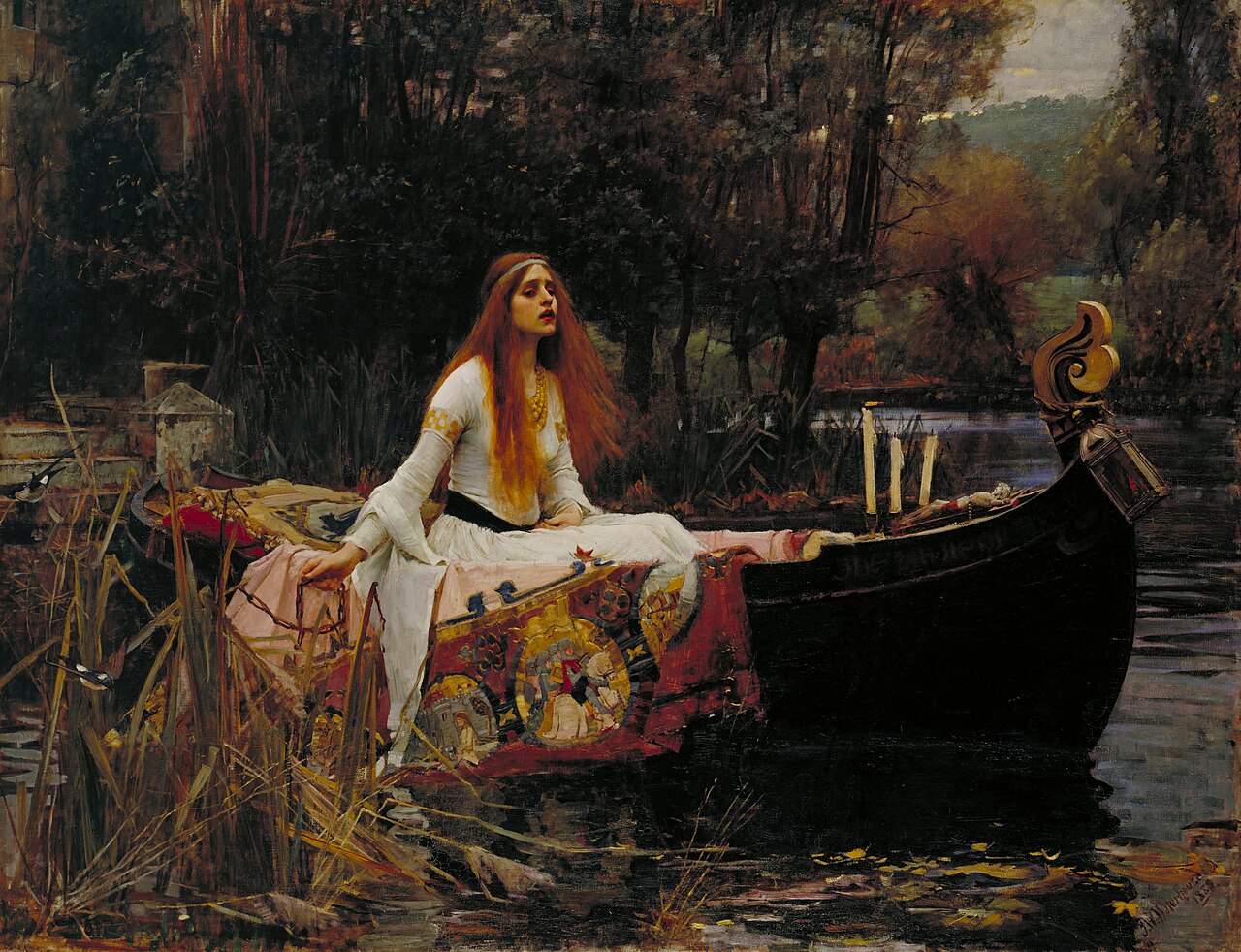
Reading color and composition
The Lady of Shalott
Follow the richly patterned textile over the side. Its colours and figures suggest a life of images carried into the waterborne scene. At the bow, candles and a small cross introduce sharply defined details against the landscape. Look at their tiny verticals beside the woman’s larger upright body: they organise attention without requiring immediate symbolic explanation.
Trace the long line of the boat and compare it with the vertical reeds and trees. The vessel offers direction while the vegetation resists it with a dense edge. The woman looks beyond the immediate objects, but the picture leaves that destination outside our view. Try reading the scene through hands, chain and water before recalling the story; the tension of release is already present.
Discussion of color and composition is the editorial team’s interpretation, not a claim to establish the artist’s intentions.
John William Waterhouse
Context of the work
Context of the work
Waterhouse painted Tate’s version in 1888, drawing on Tennyson’s poem The Lady of Shalott. This is one specific treatment of the subject.
Questions for looking
- Does the hand appear to hold or release the chain?
- What does the textile carry into the journey?
Frequently asked questions
Is this a scene from Shakespeare?
No. This painting draws on Tennyson’s poem.
Must the poem be read before viewing?
No. The near shore, chain and directed boat already make departure legible; the poem adds narrative context.
Sources and images
Official artwork record · Tate, London
Image source and usage terms · Public domain · John William Waterhouse