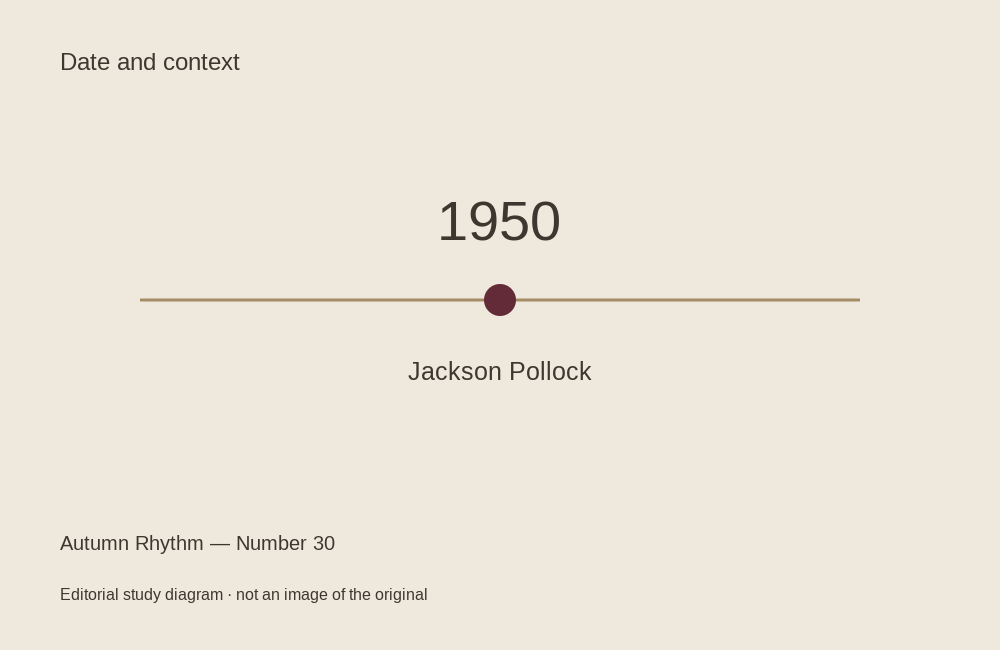
Jackson Pollock · 1950
Autumn Rhythm — Number 30
Follow the speed of lines rather than searching for one center.
Reading color and composition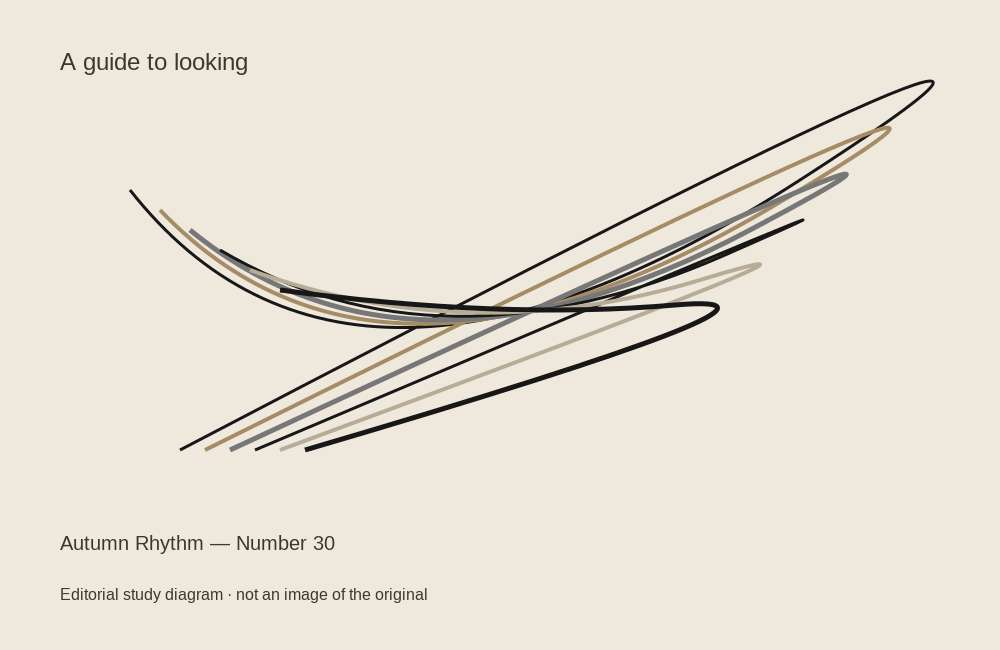
Reading color and composition
Autumn Rhythm — Number 30
Choose a thick dark line and follow it as far as possible. At crossings, layers change position; thin threads and droplets introduce other speeds. No single gesture explains the whole.
Step back and dense or open areas replace individual marks as the main impression. Alternate close looking with the whole: where does your gaze accelerate or slow?
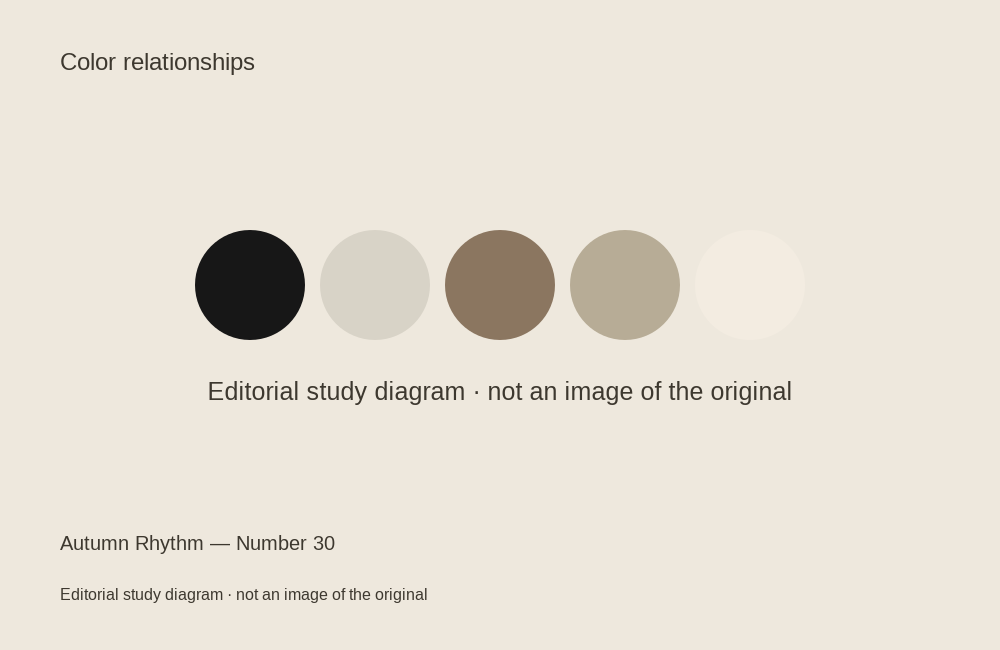
Discussion of color and composition is the editorial team’s interpretation, not a claim to establish the artist’s intentions.


Jackson Pollock
Context of the work
Context of the work
The Metropolitan Museum of Art dates the work to 1950.
Questions for looking
- Does your gaze settle in the darkest area?
- Does rhythm continue at the edges?
Frequently asked questions
Is it random?
Appearance alone cannot establish the degree of planning. Observe overlaps and densities specifically.
Must autumn mean leaves?
You need not find leaf shapes; leave the relationship between title and visual rhythm open.
Sources and images
Official artwork record · The Metropolitan Museum of Art, New York
Editorial study diagram · not an image of the original
View the original on the museum’s official page.