Jacques-Louis David
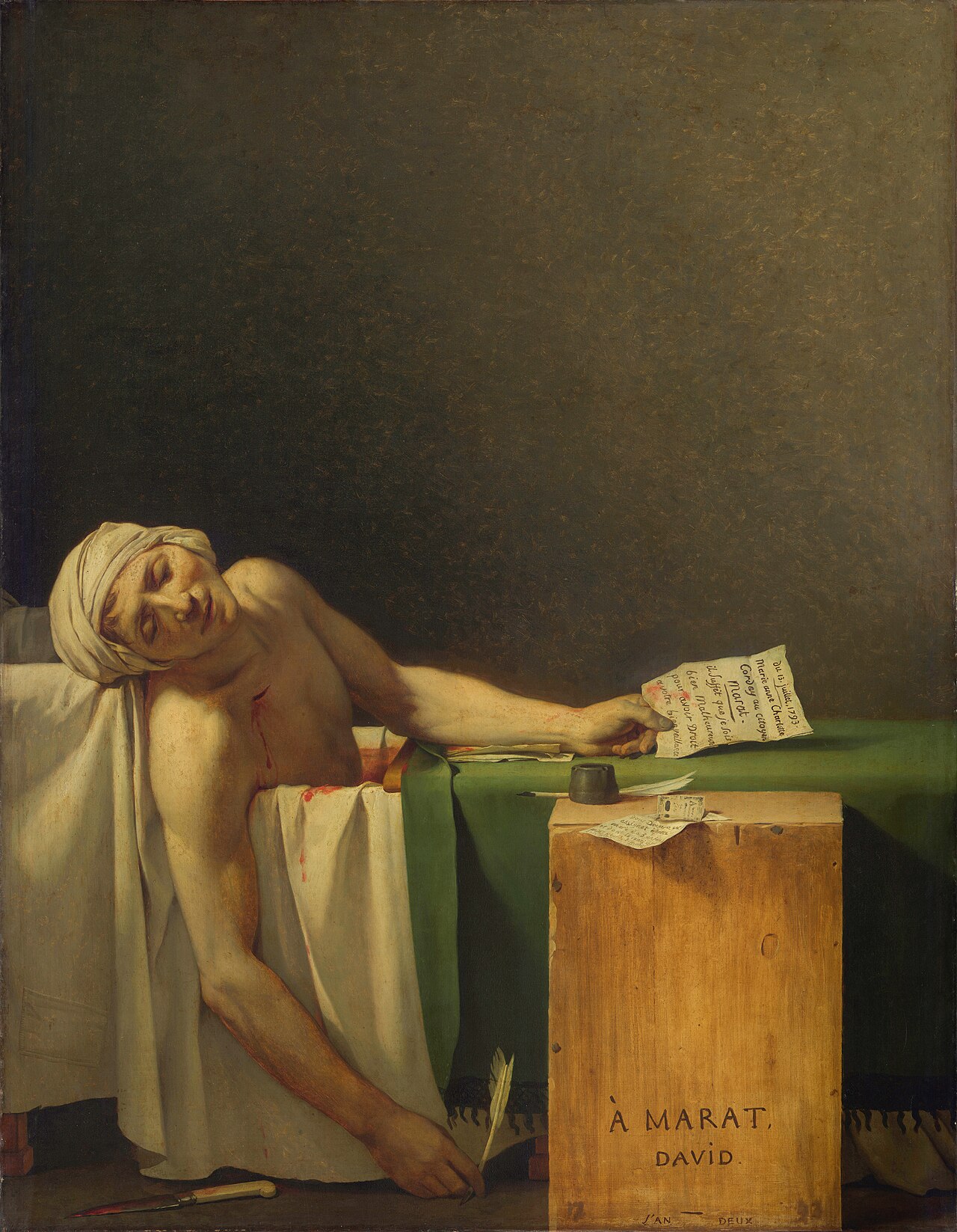
The Death of Marat
A hanging arm and an almost vacant upper half make stillness carry the weight of death.
Read the artwork essayCURATED IN SEOUL
INSPIRED BY EUROPE
Jacques-Louis David · 1785
Outstretched arms and folded bodies turn duty and grief into different rhythms beneath three arches.
Reading color and composition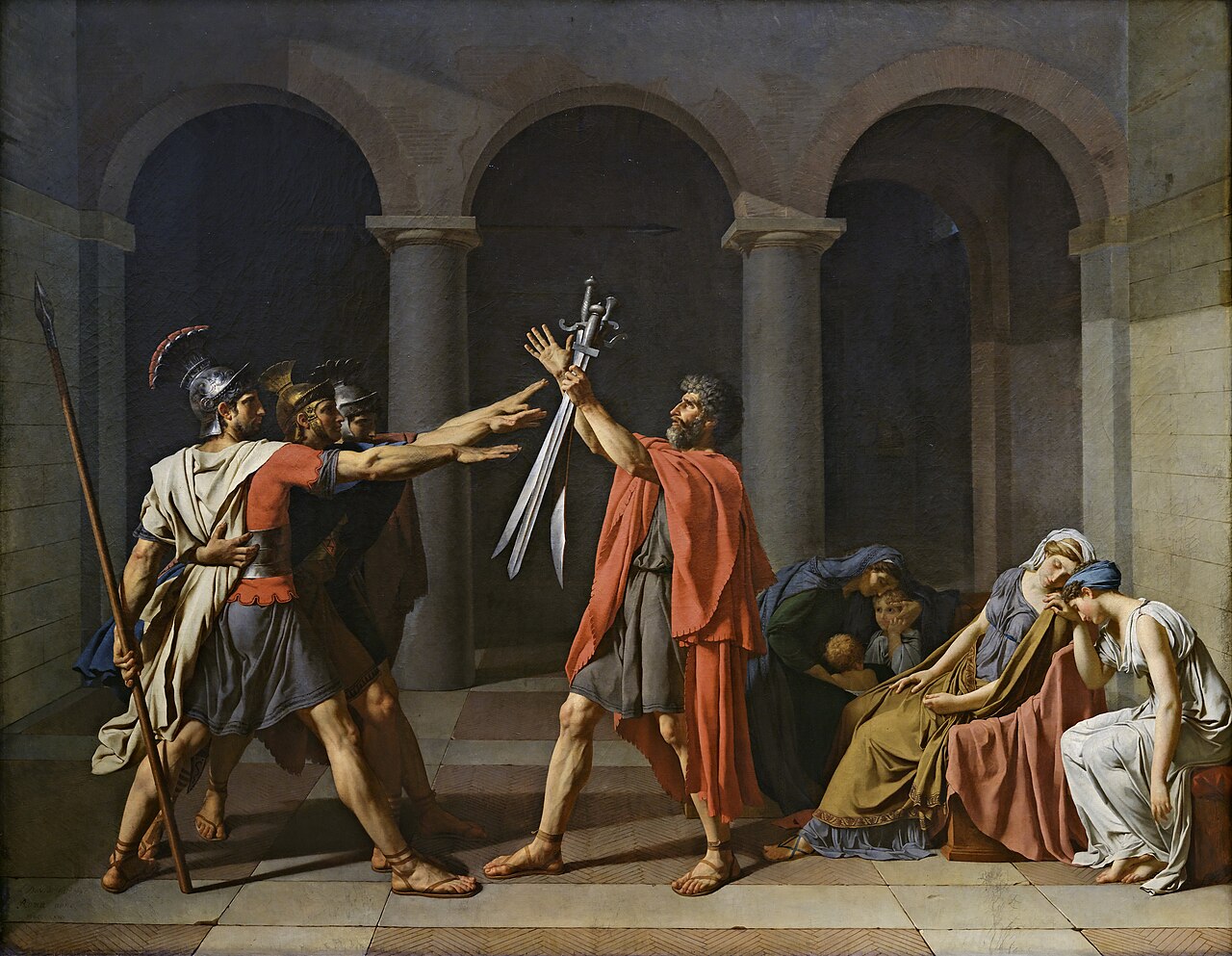
Reading color and composition
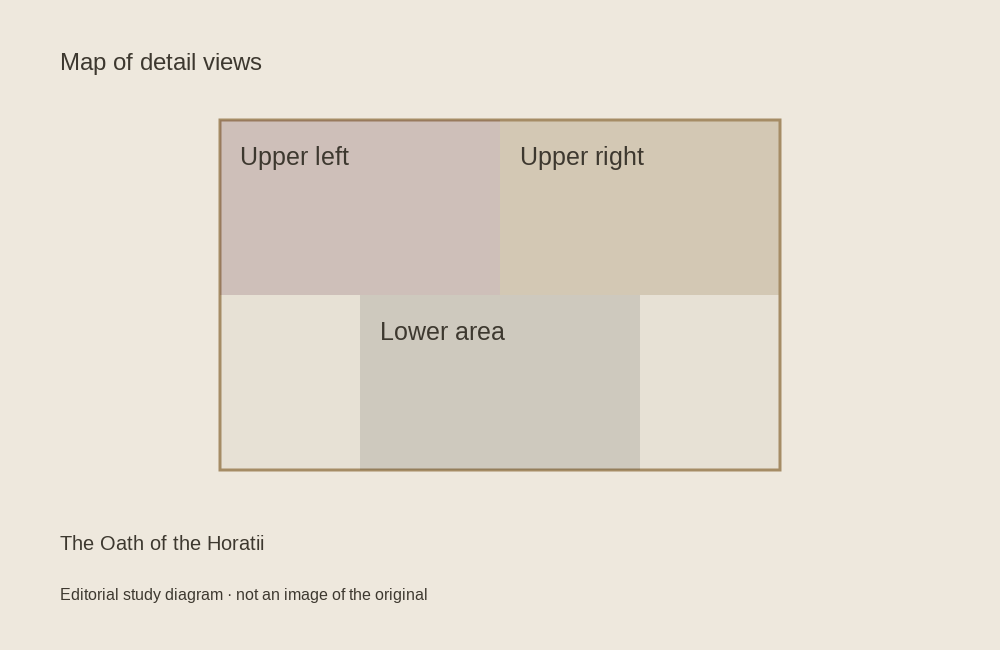
Begin with the three architectural bays. They divide the groups, yet the reaching arms connect the spaces across those divisions. Dark recesses sharpen the light limbs and blades. Follow the floor lines toward the centre, then notice how the father’s open stance anchors that convergence rather than merely filling an empty gap.
Moving right, the weight of the composition sinks. Inclined heads and overlapping folds oppose the brothers’ rigid legs. Looking first at the swords makes the oath commanding; beginning with the seated family makes its cost more visible. Neither route requires treating one figure as a simple illustration of a single emotion.
Discussion of color and composition is the editorial team’s interpretation, not a claim to establish the artist’s intentions.
Jacques-Louis David
The Louvre painting was completed in 1785 for a royal commission.
They separate the groups while placing them in one shared setting. Compare their geometry with the directions of the bodies.
No. It is a constructed history painting based on an ancient story, not a photographic witness.
Official artwork record · Musée du Louvre
Image source and usage terms · Public domain · Jacques-Louis David