Claude Monet
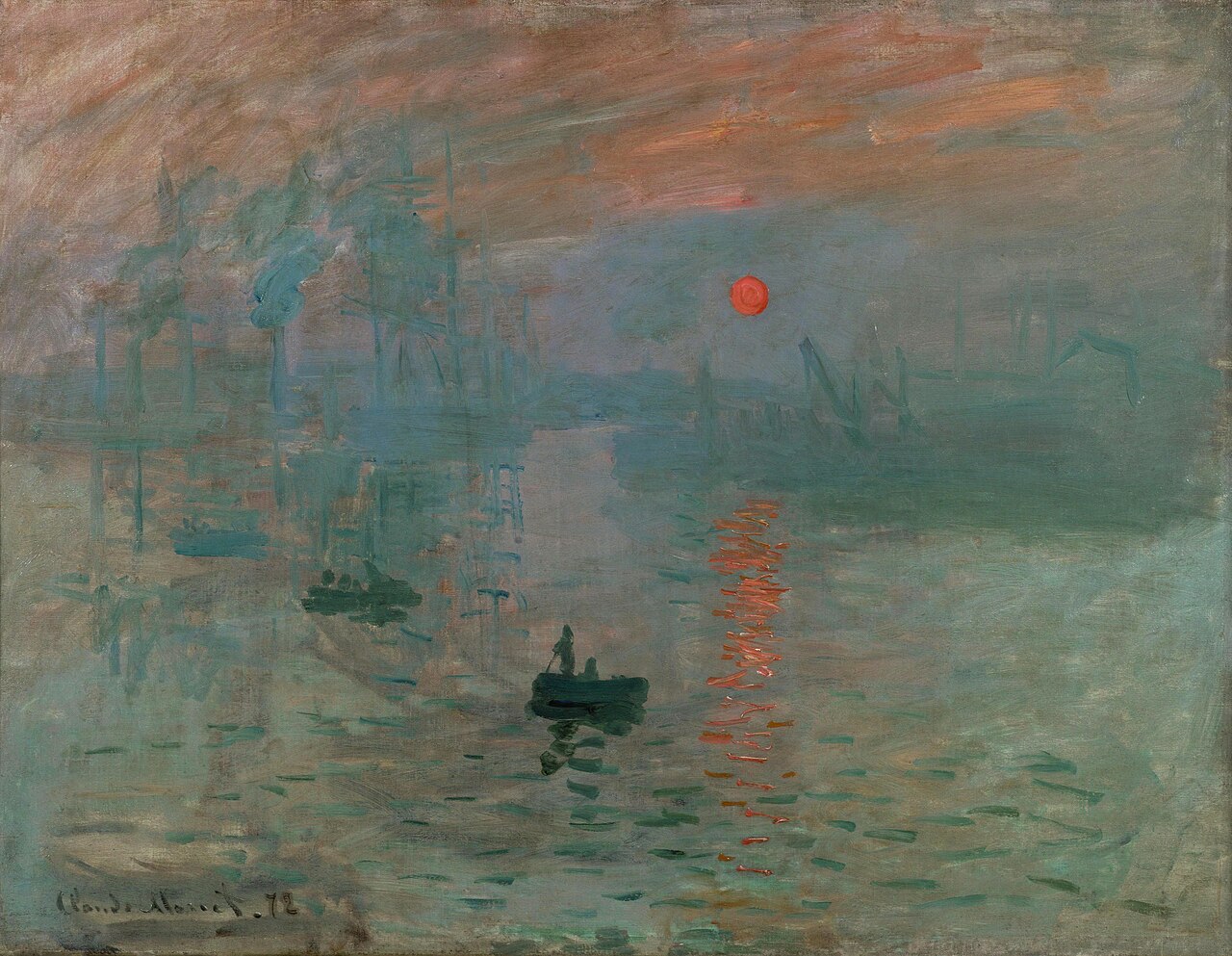
Impression, Sunrise
A small orange sun gives a misty harbour a surprisingly clear centre.
Read the artwork essayCURATED IN SEOUL
INSPIRED BY EUROPE
Claude Monet · 1899
A bridge offers a crossing while reflections make the water difficult to measure.
Reading color and composition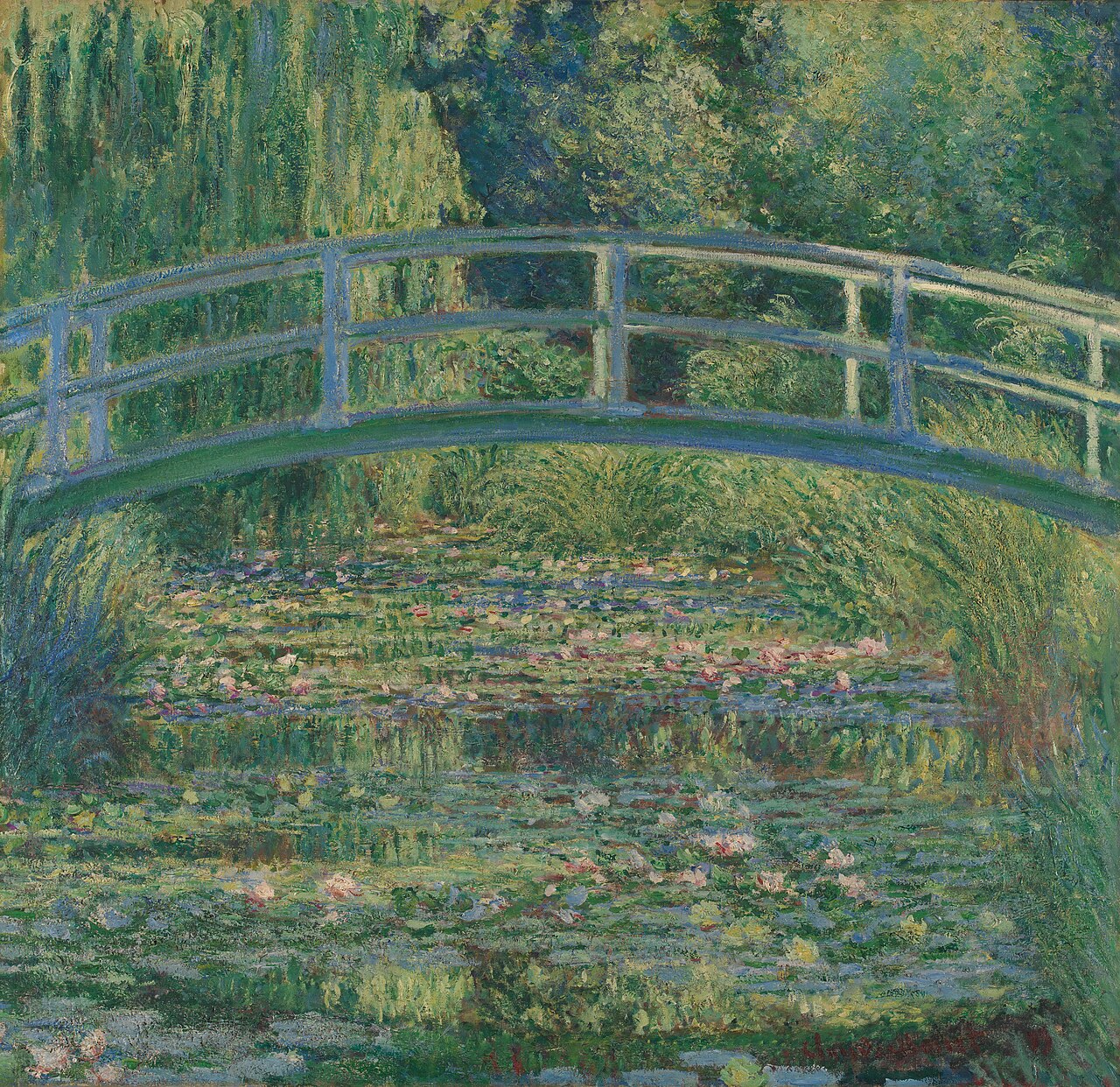
Reading color and composition
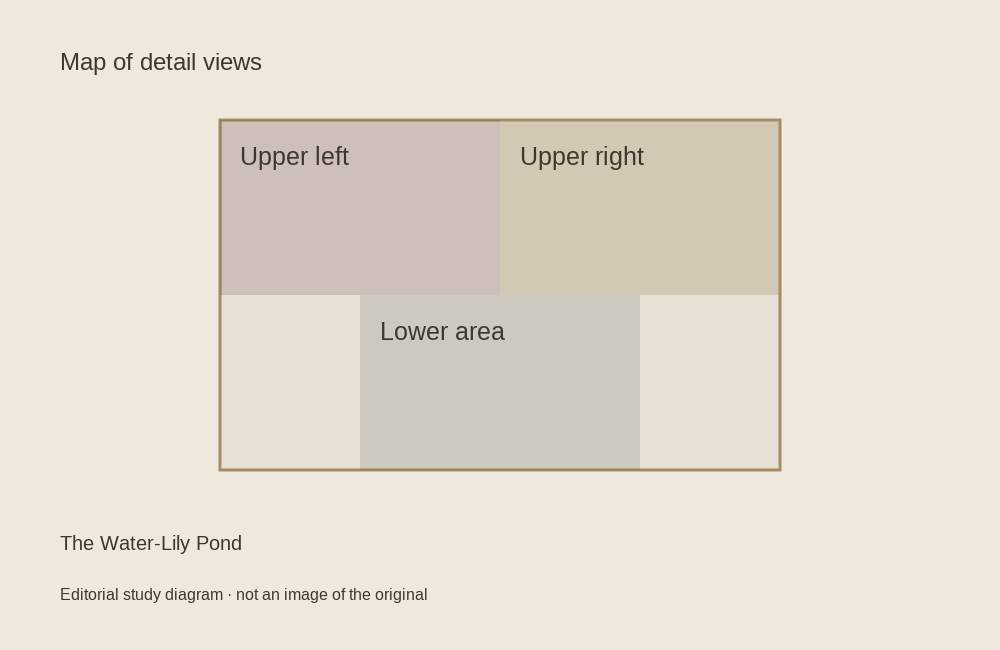
Compare the bridge’s long curve with the scattered lily pads below. The bridge gathers the view into one line; the pads disperse it into many small horizontal pauses. Reflections extend the surrounding vegetation downwards, so the pond is both a surface and an apparent depth. Notice where a leaf interrupts a reflected vertical and confirms the presence of water.
Try following one reflected colour without deciding whether it belongs above or below the surface. The painting’s interest lies partly in this hesitation. Dense greenery leaves little open sky, drawing attention inward rather than towards a distant horizon. Step back to recover the bridge, then move closer to see how distinct touches build a garden that never becomes completely still.
Discussion of color and composition is the editorial team’s interpretation, not a claim to establish the artist’s intentions.
Claude Monet
This is the National Gallery in London’s 1899 painting. Monet made other bridge and water-lily views, which should not be treated as interchangeable versions.
No. This article concerns the London bridge painting dated 1899.
They make depth uncertain while the floating leaves repeatedly restore a sense of surface.
Official artwork record · National Gallery, London
Image source and usage terms · Public domain · Claude Monet