John Everett Millais · 1851–1852
Ophelia
A floating body interrupts a riverbank whose life continues in minute detail.
Reading color and composition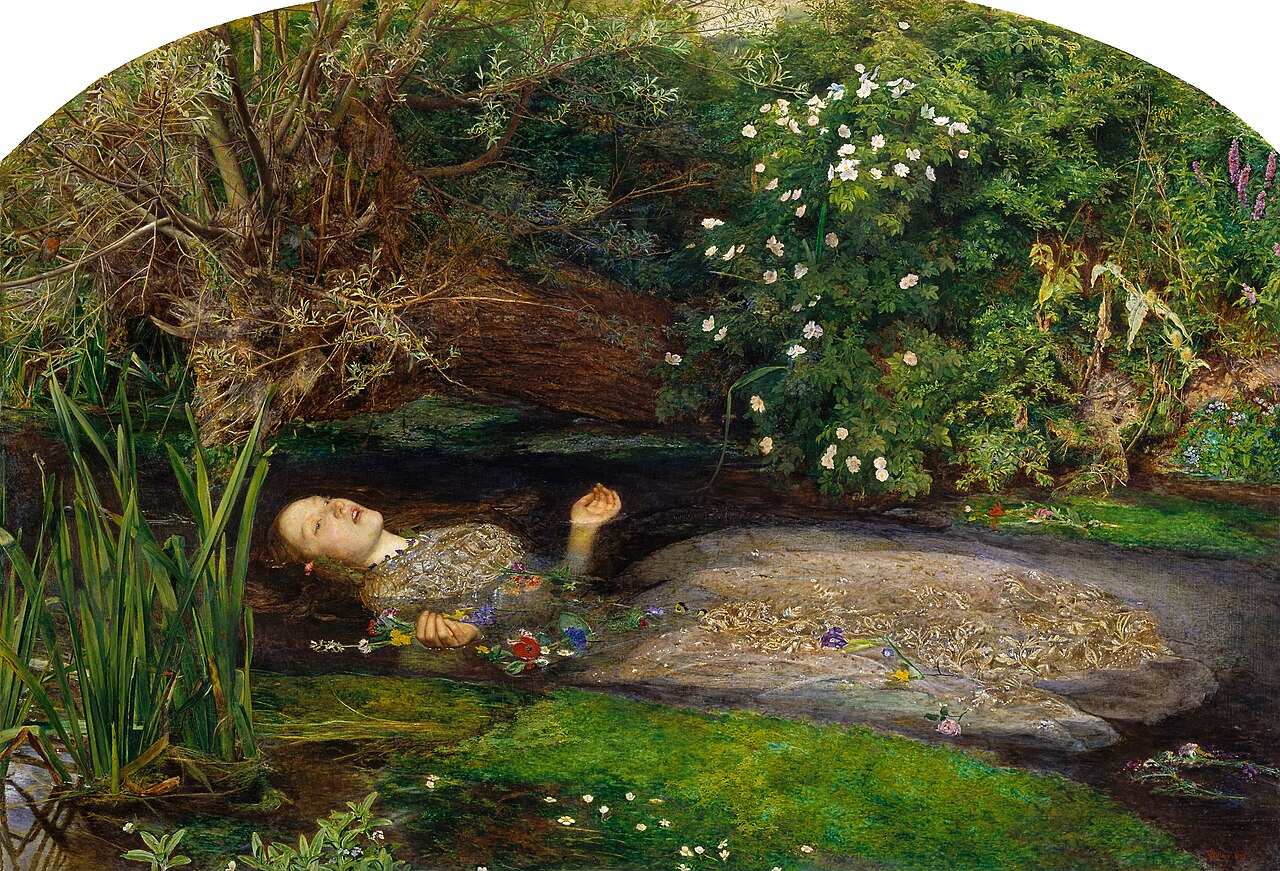
Reading color and composition
Ophelia
Let the eye travel from the figure to the crowded bank. Fine stems, scattered blossoms and interlaced branches create a dense fabric of attention. The landscape is not an empty stage around a heroine: its many small edges compete with her outline. Notice where the dark water separates the pale face from the bright vegetation.
Compare the hand-held and floating flowers with the rooted growth behind. Their separation makes a quiet contrast between things still attached and things carried away. You do not need to assign each flower a symbolic meaning to feel that difference. Try looking first at the upper foliage and then returning to the body; the living bank makes the suspended human moment more difficult to dismiss as decoration.
Discussion of color and composition is the editorial team’s interpretation, not a claim to establish the artist’s intentions.
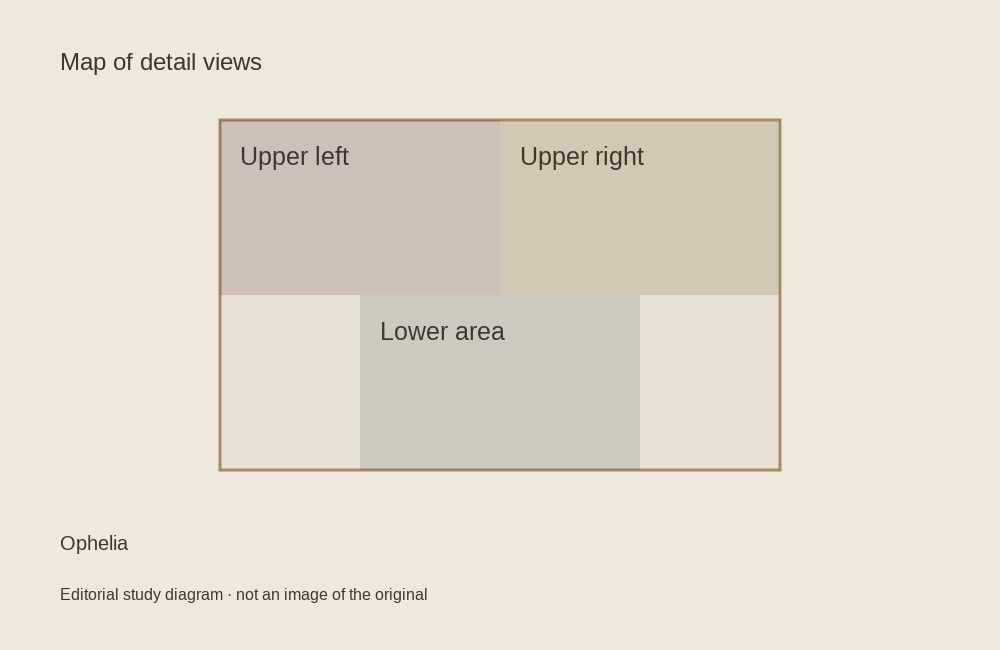
John Everett Millais
Context of the work
Context of the work
Millais painted this work in 1851–1852. Tate’s painting represents Ophelia from Shakespeare’s Hamlet.
Questions for looking
- Does the dress seem to support or burden the body?
- Where does detailed vegetation compete with the face?
Frequently asked questions
Is every flower’s meaning required to understand the image?
No. Their placement, colour and attachment already contribute to the visible tension.
Is this a scene of ordinary rest?
The unsupported hands and floating body distinguish it from a comfortable reclining pose.
Sources and images
Official artwork record · Tate, London
Image source and usage terms · Public domain · John Everett Millais