Eugène Delacroix · 1830
Liberty Leading the People
An upward flag and the weight of fallen bodies keep forward movement from becoming a single uncomplicated emotion.
Reading color and composition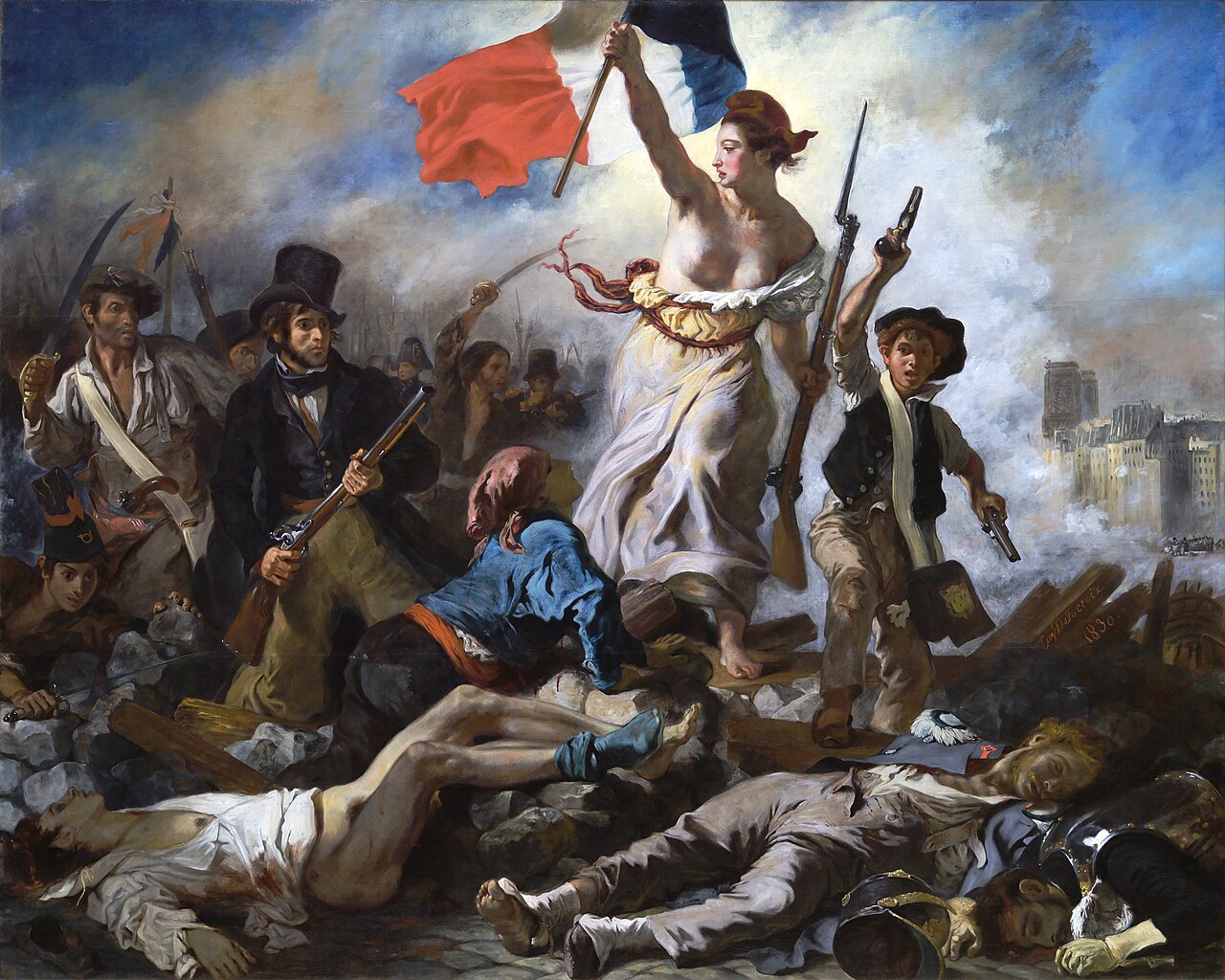
Reading color and composition
Liberty Leading the People
First find the repeated touches of red. The flag’s colour links small areas, while smoke and earth tones deny every contour equal clarity. Watch how the central body separates from darker groups and reconnects with them through light and overlapping limbs. Its prominence depends on those surrounding interruptions, not just on its position in the middle.
At right, an arm and weapons rise; at left, a hat and long gun establish other angles. The crowd does not move identically, which makes it feel like accumulated pressure rather than a decorative procession. Read the horizontal bodies as a boundary, then as an obstacle: your imagined place before the scene may also shift.
Discussion of color and composition is the editorial team’s interpretation, not a claim to establish the artist’s intentions.
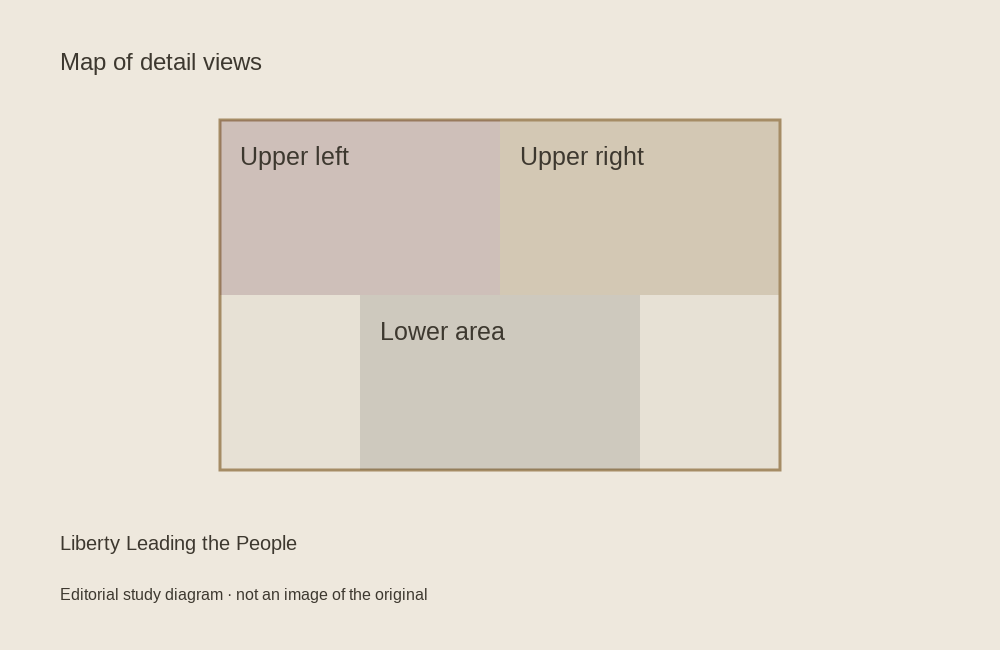
Eugène Delacroix
Context of the work
Context of the work
Delacroix painted this Louvre work in 1830, responding to the July Revolution.
Questions for looking
- Where does upward movement remain if you hide the flag?
- What distance do the foreground bodies create?
Frequently asked questions
Does it show the 1789 Revolution?
No. Its subject is the July Revolution of 1830.
Is the central woman simply a portrait?
She personifies Liberty. Symbolic figure and materially convincing people share the same pictorial space.
Sources and images
Official artwork record · Musée du Louvre
Image source and usage terms · Public domain · Eugène Delacroix