Wassily Kandinsky · 1923
Composition VIII
Treat intervals between circles and lines like pauses in sound.
Reading color and composition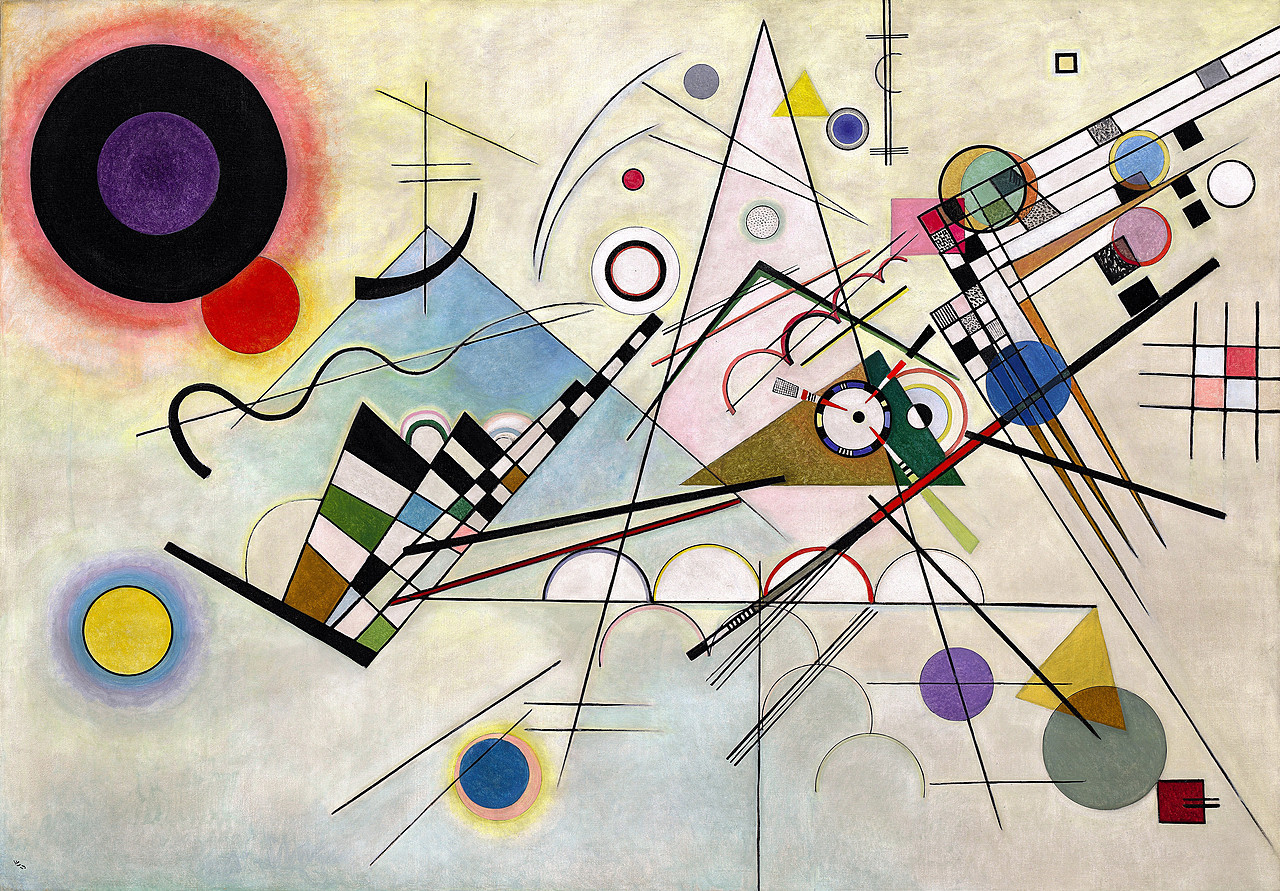
Reading color and composition
Composition VIII
Start at the large dark circle in the upper left and move toward fine lines on the right. Weight and visual speed change between a broad mass and small signs.
The open ground supports floating shapes while also supplying distances that connect them. Compare lines that meet with those that miss: still geometry can produce tension and rhythm.
Discussion of color and composition is the editorial team’s interpretation, not a claim to establish the artist’s intentions.
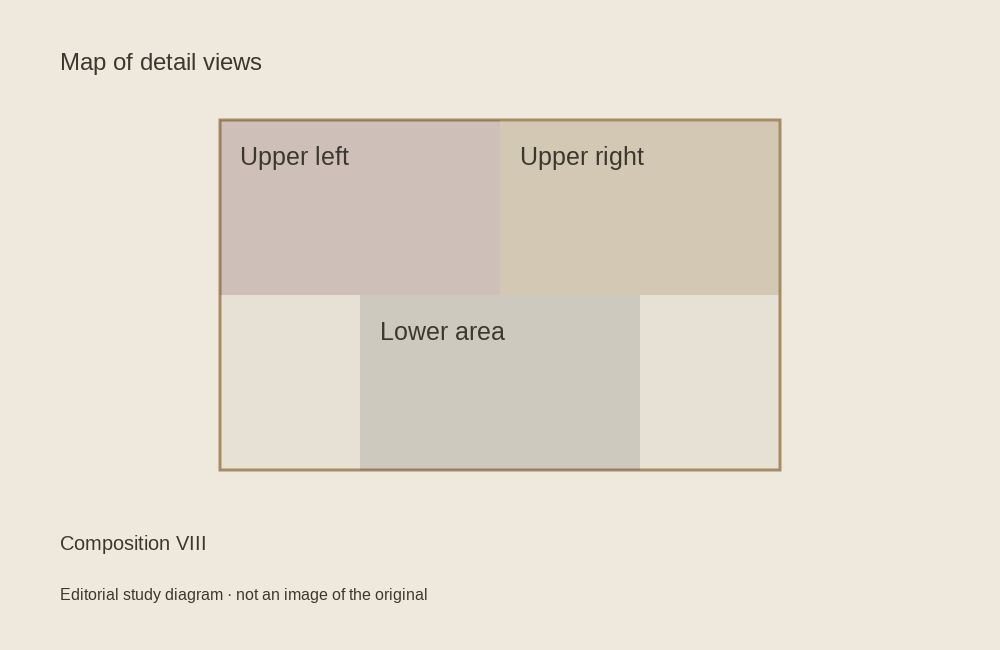
Wassily Kandinsky
Context of the work
Context of the work
The Guggenheim dates this work to 1923.
Questions for looking
- Which shape feels heaviest?
- Does covering an empty area change relationships?
Frequently asked questions
Must you identify an object?
In this abstraction, observing relationships between forms is already a useful approach.
Does each color have a fixed sound?
Music is a helpful analogy, not a code forcing every viewer to hear the same note.
Sources and images
Official artwork record · Solomon R. Guggenheim Museum, New York
Image source and usage terms · Public domain · Vasily Kandinsky