Jean-Auguste-Dominique Ingres · 1814
Grande Odalisque
A long back and a returning gaze make smoothness follow a different order from natural anatomy.
Reading color and composition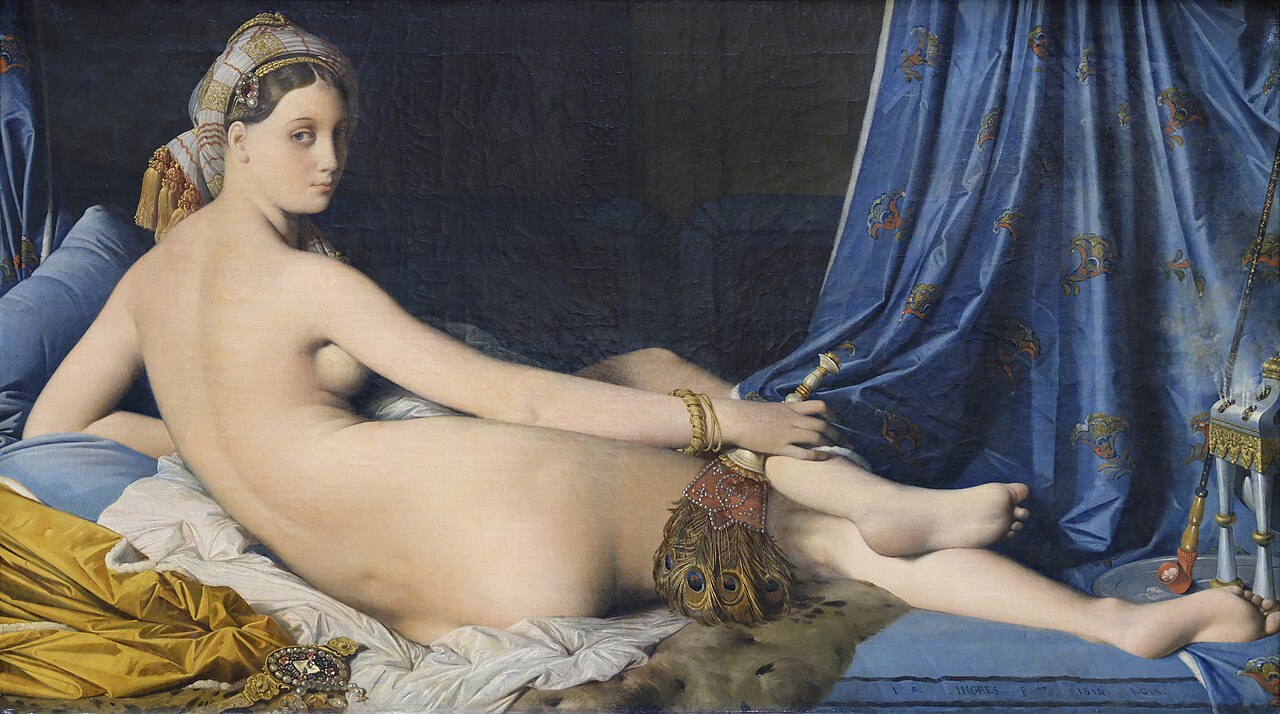
Reading color and composition
Grande Odalisque
Trace the outline from shoulder through waist to hip. Its extended curve lets the body read as one movement; isolating arms and legs makes the folds of the pose more complicated. Smooth modelling and firm edges operate together. The impression of ease is therefore something the picture constructs, not simply an ordinary position copied without alteration.
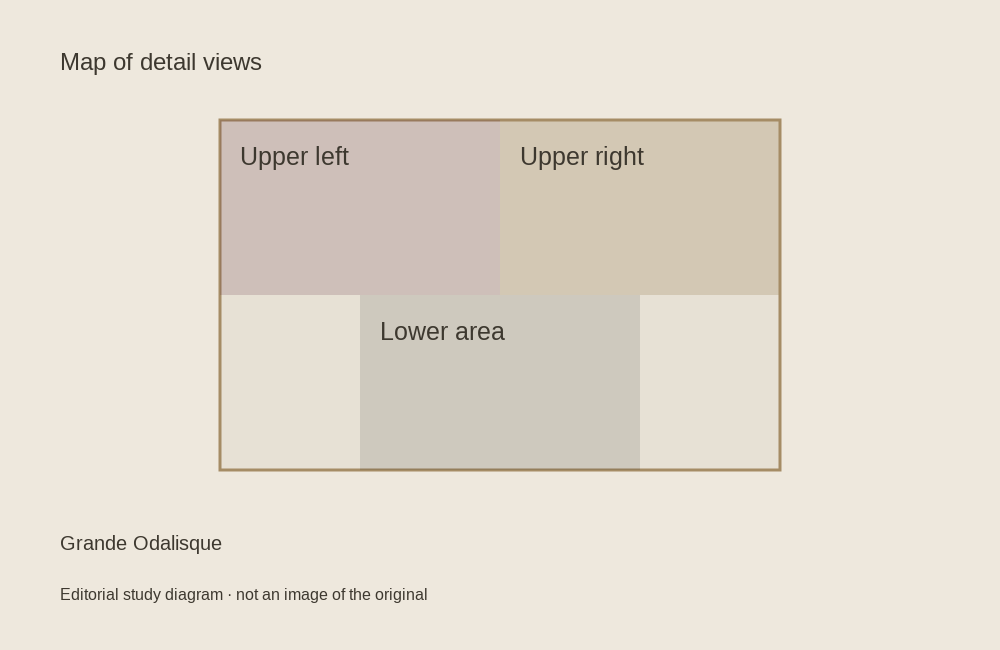
The turning face and averted torso offer different directions of contact. Fan and decorated cloth are sensuous objects but also separate one surface from another. Include the area occupied by bedding and curtain rather than isolating the nude: the room begins to feel like a stage arranged for looking.
Discussion of color and composition is the editorial team’s interpretation, not a claim to establish the artist’s intentions.
Jean-Auguste-Dominique Ingres
Context of the work
Context of the work
Ingres painted the Louvre work in 1814.
Questions for looking
- How does following the back differ from beginning with the face?
- Would the skin feel warmer without the blue textile?
Frequently asked questions
Must we count vertebrae?
Rather than reducing the painting to an anatomical mistake, observe how elongation and folded limbs shape its visual rhythm.
Is it a neutral room record?
Read it as a European painter’s staged exotic setting, not an unmediated document of another culture’s everyday life.
Sources and images
Official artwork record · Musée du Louvre
Image source and usage terms · Public domain · Jean-Auguste-Dominique Ingres