Nicolas Poussin · c.1638
Et in Arcadia ego
Follow a reading finger and the different heights of bodies around stone.
Reading color and composition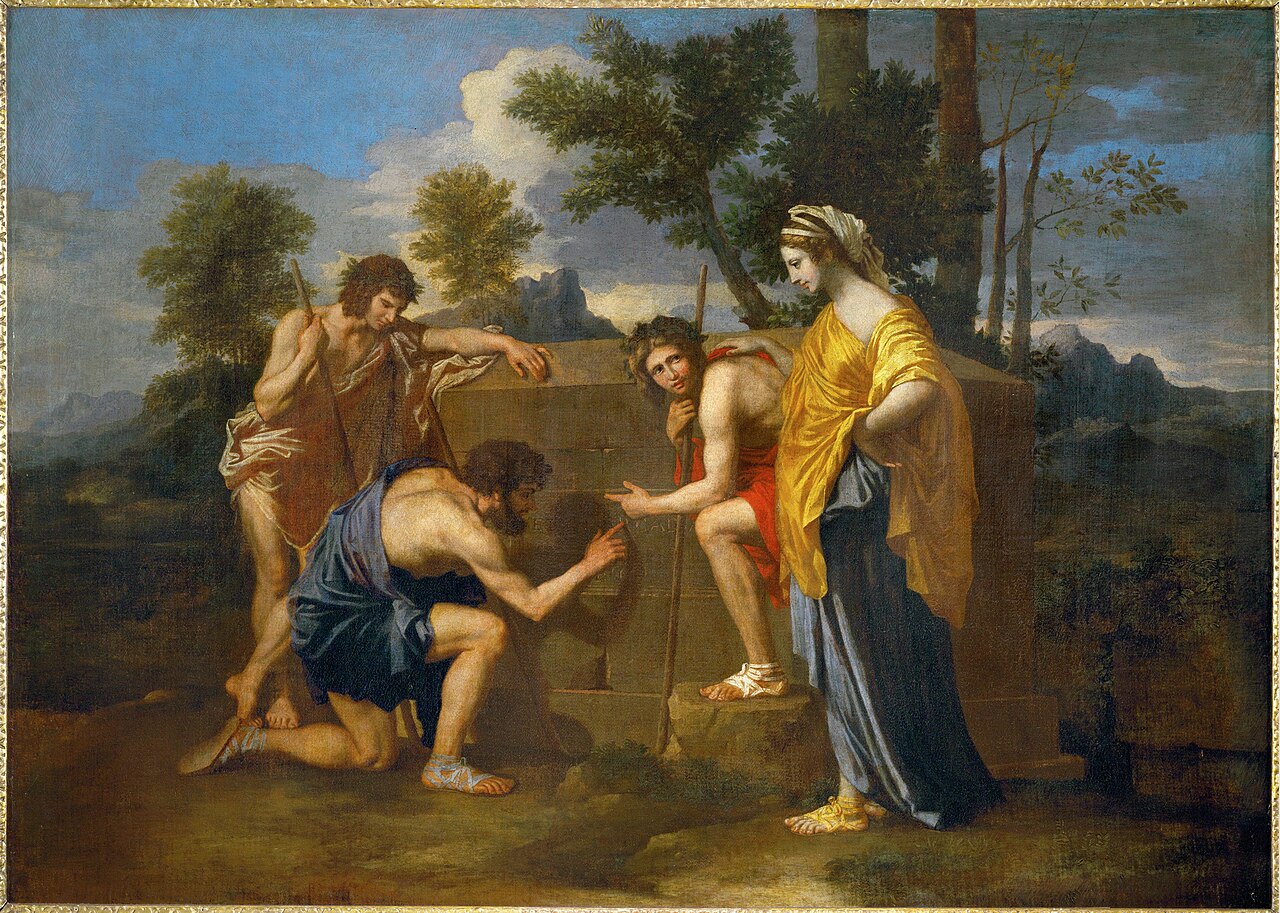
Reading color and composition
Et in Arcadia ego
Compare the tomb’s horizontal edges with the finger’s small movement. Stone provides a broad, solid surface, while the hand selects a particular point upon it. The difference between bent and standing bodies moves our attention slowly up and down.
The landscape continues less busily behind them. Look at sky, trees and distant ground, then return to the tomb. People concentrating on small letters within wide nature become more distinct. Understanding the words and observing the act of reading are different ways of looking that can accompany one another.
Discussion of color and composition is the editorial team’s interpretation, not a claim to establish the artist’s intentions.
Nicolas Poussin
Context of the work
Context of the work
The Louvre dates this version to about 1638.
Questions for looking
- Who moves closest to the inscription?
- How do standing and bending figures connect?
Frequently asked questions
Is this Poussin’s only composition of the subject?
This article considers the second composition, held by the Louvre.
Is there only one translation of the phrase?
Its interpretation has been debated; one rendering should not be treated as the sole conclusion.
Sources and images
Official artwork record · Musée du Louvre, Paris
Image source and usage terms · Public domain · Nicolas Poussin