Arnold Böcklin · 1880
Isle of the Dead
A tiny boat approaches a rock enclosure that gives no easy view inside.
Reading color and composition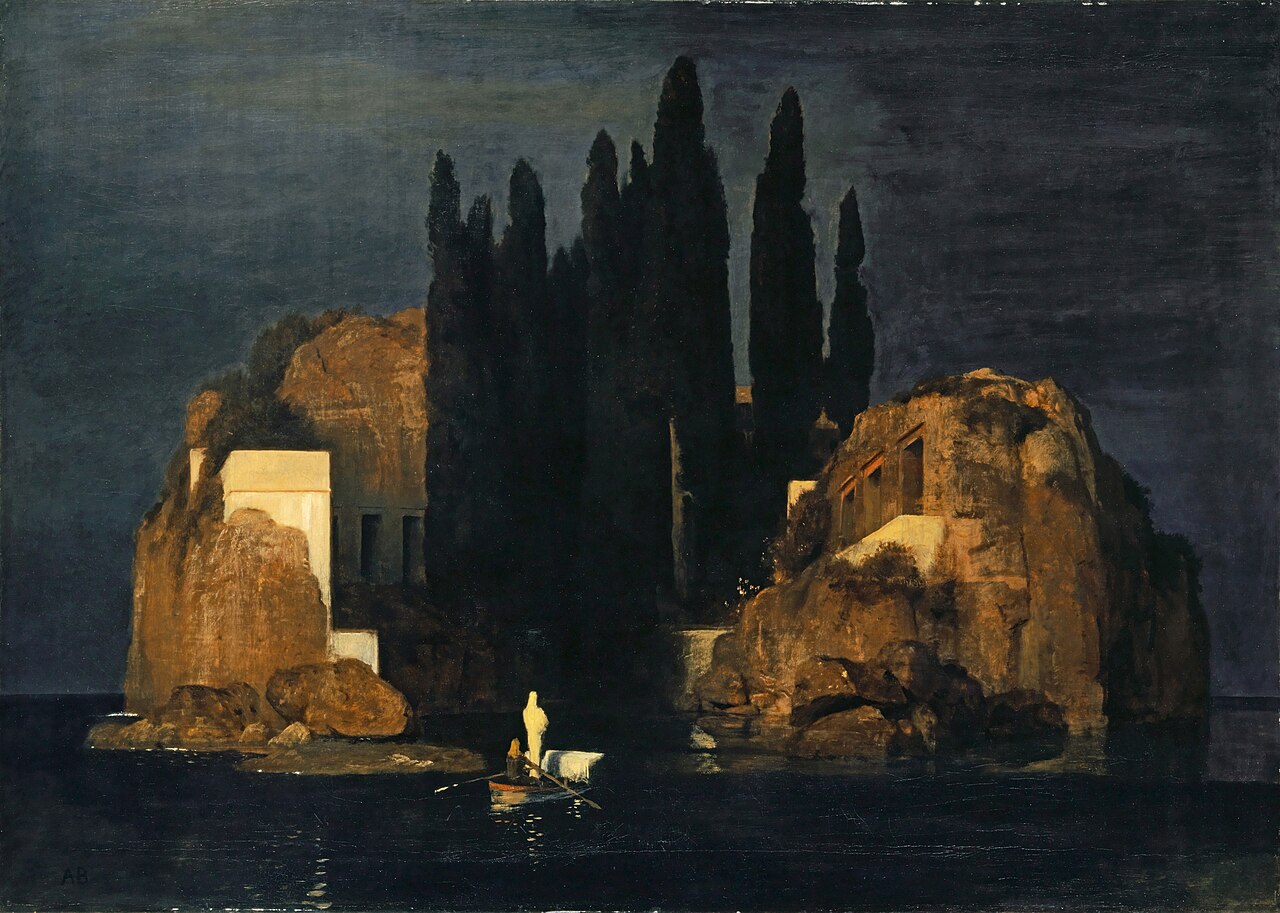
Reading color and composition
Isle of the Dead
Follow the cliffs around the central opening. Their enclosing forms both shelter and obstruct the trees. Small architectural cuts in the rock suggest human use without turning the island into an ordinary settlement. The water leaves an interval between our position and the destination; we remain outside the approach, watching rather than arriving.
Compare the pale stone, dark foliage and subdued surface of the water. The painting’s mood depends on their unequal weights, not simply on the title. Cover the boat and the scene becomes a closed landform; uncover it and distance turns into a journey. Avoid assigning every shape a single funerary meaning before noticing how the composition slows the eye.
Discussion of color and composition is the editorial team’s interpretation, not a claim to establish the artist’s intentions.
Arnold Böcklin
Context of the work
Context of the work
This article concerns the 1880 first version in Kunstmuseum Basel, on deposit from the Gottfried Keller Foundation. Böcklin made other versions of the motif.
Questions for looking
- Does the island appear to shelter or imprison?
- How does the boat change the meaning of distance?
Frequently asked questions
Are all Isle of the Dead images identical?
No. Museum and date distinguish the Basel first version from later treatments.
Must the island be a real location?
The visible arrangement can be read as an imagined space without identifying a literal destination.
Sources and images
Official artwork record · Kunstmuseum Basel
Image source and usage terms · Public domain · Arnold Böcklin