Jean-François Millet
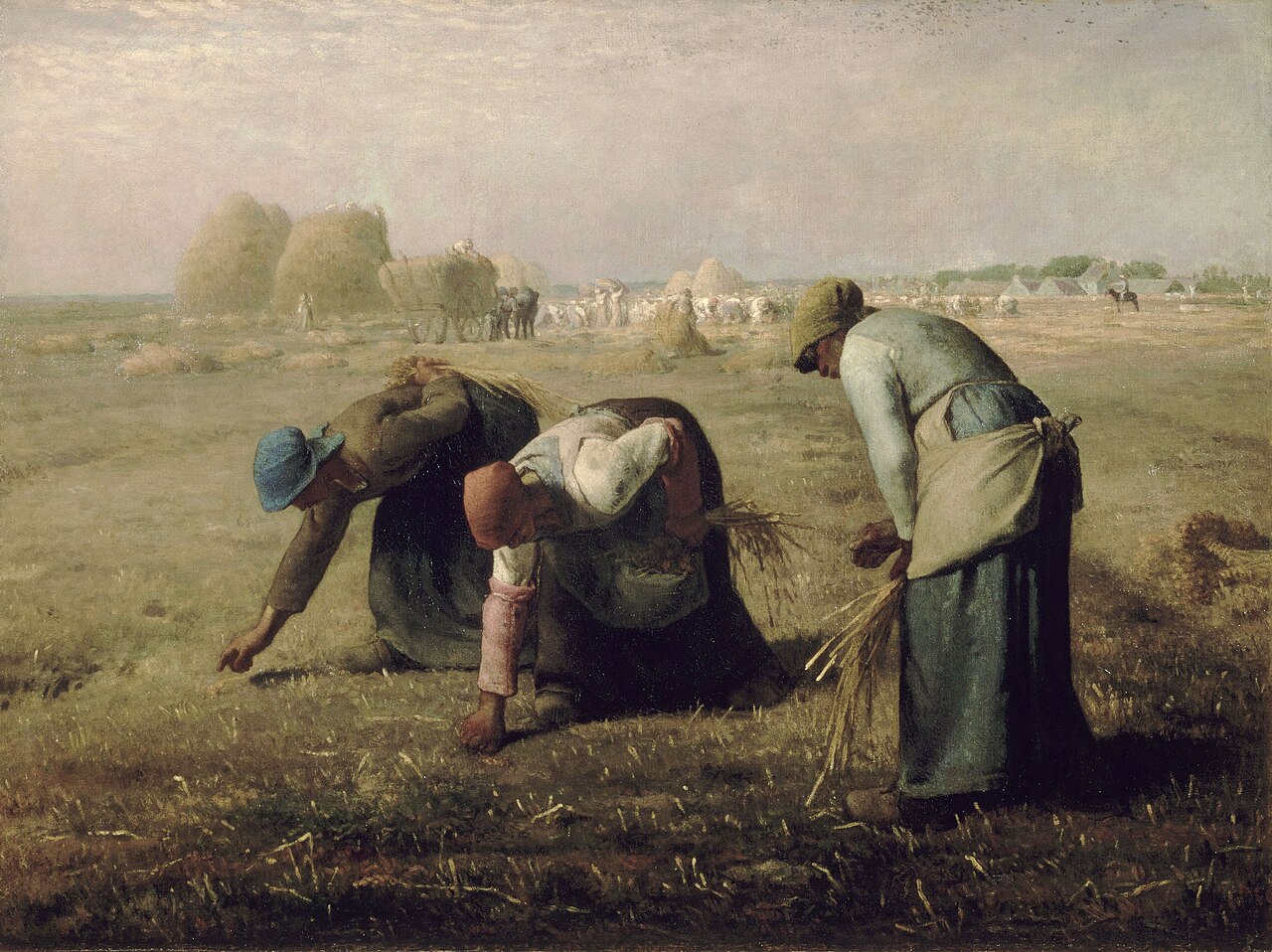
The Gleaners
Three bent bodies repeat a slow rhythm against the distant abundance of the harvest.
Read the artwork essayCURATED IN SEOUL
INSPIRED BY EUROPE
Jean-François Millet · 1857–1859
A small basket between two paused bodies anchors a broad evening field.
Reading color and composition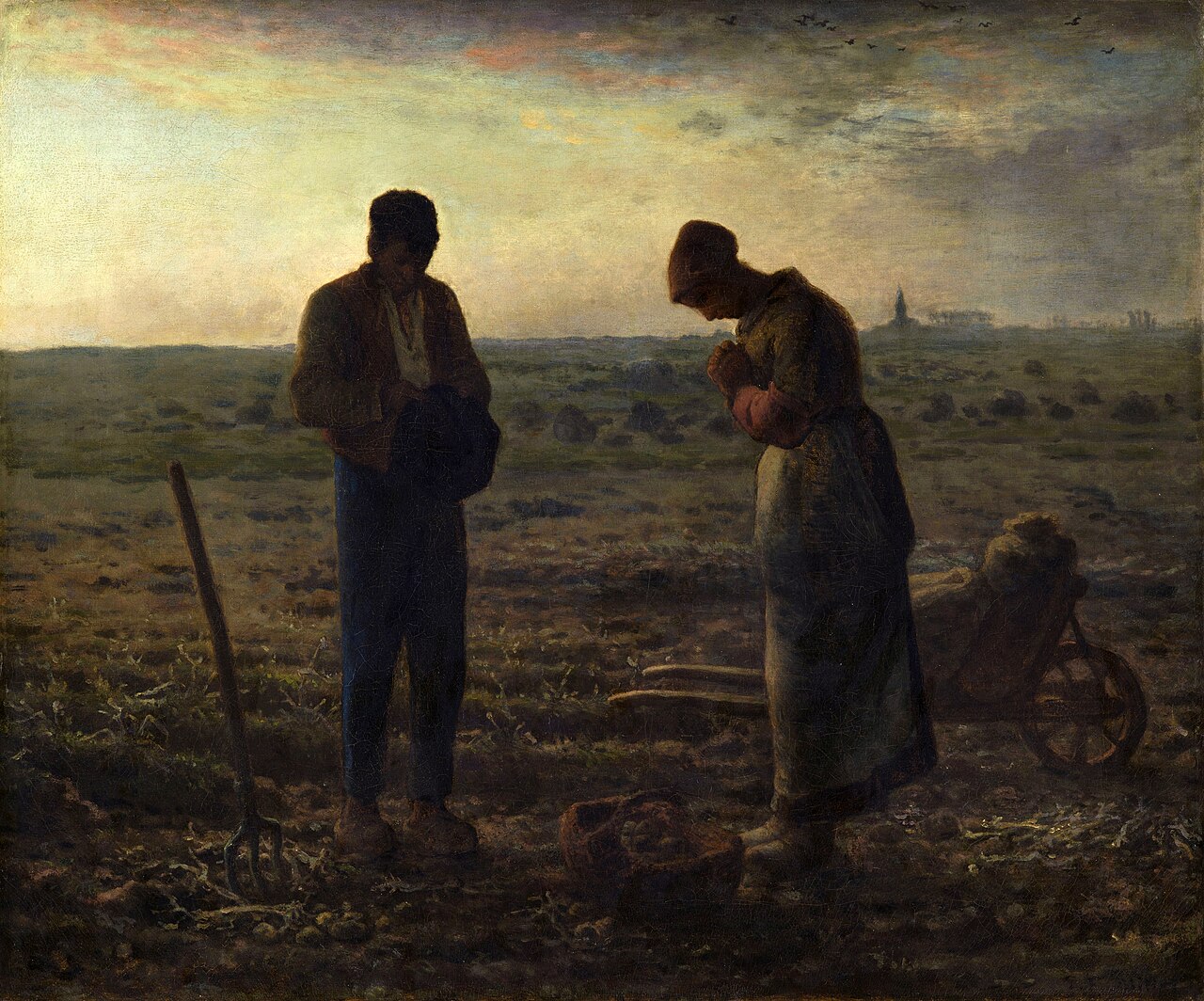
Reading color and composition
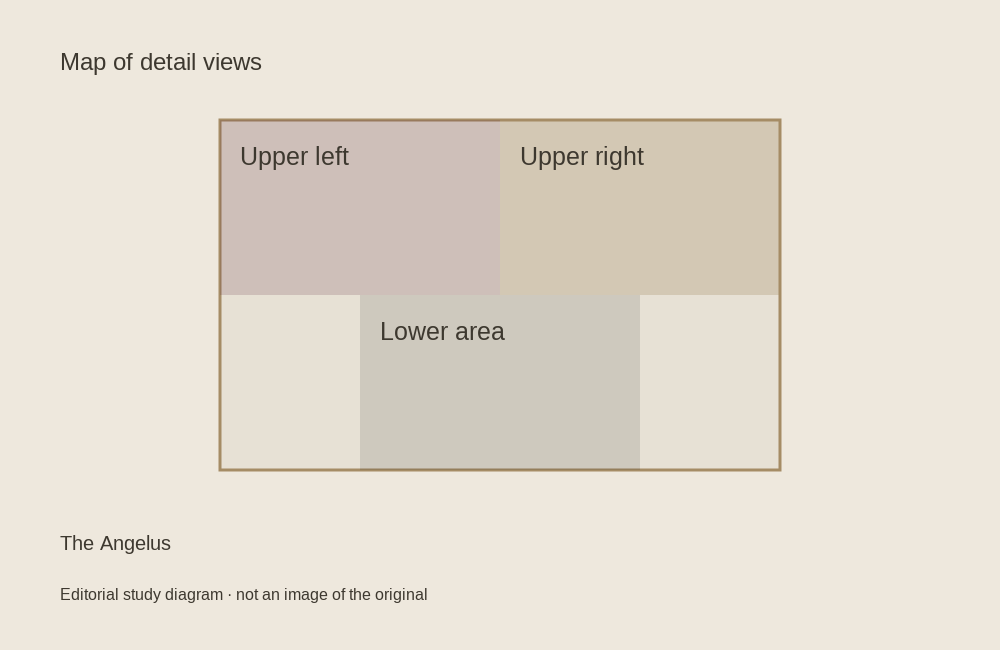
Look at the basket, the barrow behind and the tool standing in the earth. Objects of work now help describe a pause rather than forward activity. The interval between the silhouettes is narrow, yet the low horizon opens a much wider space behind it. Near bodies and distant sky create stillness through their unequal scales.
Find the tiny church spire, then return to the hands. A very small visible form invites an imagined sound; the larger figures seem to answer it. Painting cannot ring a bell, but the arrangement of posture and distance can suggest time experienced through listening. Avoid fixing the dim light as sadness alone: rest, concentration and shared attention are also possible ways of reading the pause.
Discussion of color and composition is the editorial team’s interpretation, not a claim to establish the artist’s intentions.
Jean-François Millet
Millet painted this field prayer, now at Musée d’Orsay, in 1857–1859.
Signs of nearby work make the interruption of bodily activity more legible.
We see postures and distances that invite us to imagine a response to sound.
Official artwork record · Musée d’Orsay
Image source and usage terms · Public domain · Jean-François Millet